Age Metrics as Predictors for Redistribution Timing in Multi-Property Digital Holdings
Jordan Lang · Aug 4, 2026

Age Metrics as Predictors for Redistribution Timing in Multi-Property Digital Holdings
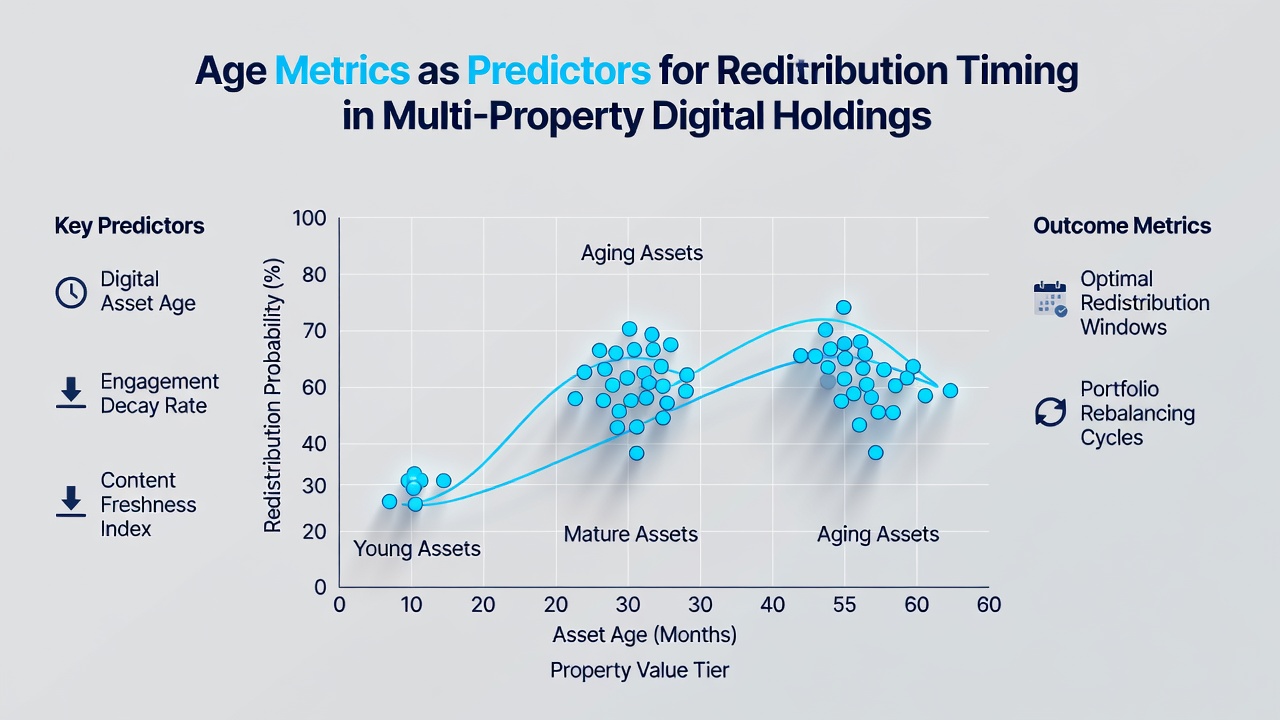
Digital asset portfolios rely on structured approaches to timing decisions, and age metrics serve as core indicators that shape redistribution schedules in multi-property holdings. Researchers track registration dates, historical activity spans, and renewal cycles to identify patterns that align with optimal transfer windows. Data from industry databases shows that holdings aged between five and seven years often exhibit stabilization in value trajectories, which influences decisions on when to reallocate resources across a collection of properties.
Analysts compile metrics such as first registration year, length of continuous ownership, and frequency of prior transfers to build predictive models. These models draw from longitudinal records maintained by registry operators, and they highlight correlations between elapsed time since initial registration and subsequent market liquidity. In practice, portfolios that incorporate age-weighted scoring systems demonstrate more consistent redistribution outcomes compared to those relying solely on current valuation snapshots.
Core Components of Age-Based Evaluation Frameworks
Frameworks for assessing age metrics begin with registration chronology, which records the exact date a digital property entered the system. Subsequent layers add data on active resolution periods, prior ownership changes, and any documented lapses followed by reacquisitions. Observers note that properties exceeding ten years of cumulative history frequently appear in redistribution analyses conducted by institutional holders, because extended timelines correlate with established indexing patterns in search systems.
Additional variables include the interval since the most recent name server update and the duration of uninterrupted WHOIS privacy settings. These elements combine into composite scores that forecast intervals when redistribution yields higher efficiency. Figures from portfolio management platforms indicate that age thresholds around the eight-year mark coincide with shifts in buyer interest profiles, prompting holders to initiate evaluation cycles during those periods.
Integration of Temporal Data into Portfolio Strategies
Portfolio managers integrate age metrics with broader performance indicators to determine redistribution sequences across multiple holdings. A property registered in 2014, for instance, may reach a redistribution consideration point by 2026 when paired with metrics showing steady traffic continuity. Systems that process these timelines allow simultaneous review of several assets, revealing clusters where age alignment supports coordinated transfer actions.
Software tools now embed calendar functions that flag upcoming anniversaries of registration dates, cross-referenced against aggregated market data. In August 2026, updates to registry reporting standards are expected to expand available historical fields, which will refine the precision of these predictive tools. Canadian regulatory filings on digital asset disclosures provide supplementary benchmarks that portfolio operators cross-check against their internal age calculations.
Empirical Patterns Observed Across Holdings
Studies conducted by academic teams at institutions such as the University of Melbourne have examined datasets spanning thousands of digital properties and identified recurring intervals where age metrics align with redistribution events. Properties that reach specific age bands show measurable increases in transaction volume during subsequent quarters. Those patterns hold across different top-level domains and geographic registration origins.
European Commission reports on digital market dynamics further illustrate how age-derived signals interact with regulatory timelines, particularly when holdings cross jurisdictional boundaries. Portfolio operators apply these insights to stagger redistribution actions, avoiding simultaneous movements that could affect liquidity metrics. The resulting schedules reflect layered consideration of both chronological age and external calendar events.
Future Adjustments in Metric Application
Emerging registry enhancements scheduled for rollout will introduce granular age sub-metrics, such as segmented resolution history and prior content persistence indicators. These additions will allow finer calibration of redistribution forecasts within multi-property collections. Observers tracking pilot programs report that early adopters already test combined models that weight age against projected renewal cost curves.
Continued refinement depends on consistent data feeds from global registries, and organizations monitoring these developments prepare updated scoring protocols accordingly. The emphasis remains on factual correlations derived from recorded timelines rather than speculative projections.
Conclusion
Age metrics function as established components within redistribution planning for multi-property digital holdings. Systematic collection of registration histories, ownership durations, and related temporal data supports the construction of timing models used across the sector. Available evidence from registry records and independent analyses confirms that these metrics contribute measurable structure to decision processes, particularly as new reporting standards emerge in periods such as August 2026. Portfolio operators continue to reference these indicators alongside supplementary datasets to maintain alignment between asset age profiles and redistribution sequences.