Analytical Frameworks Linking Registration Histories to Asset Allocation Patterns in Secondary Markets
Avery Schmid · Aug 25, 2026
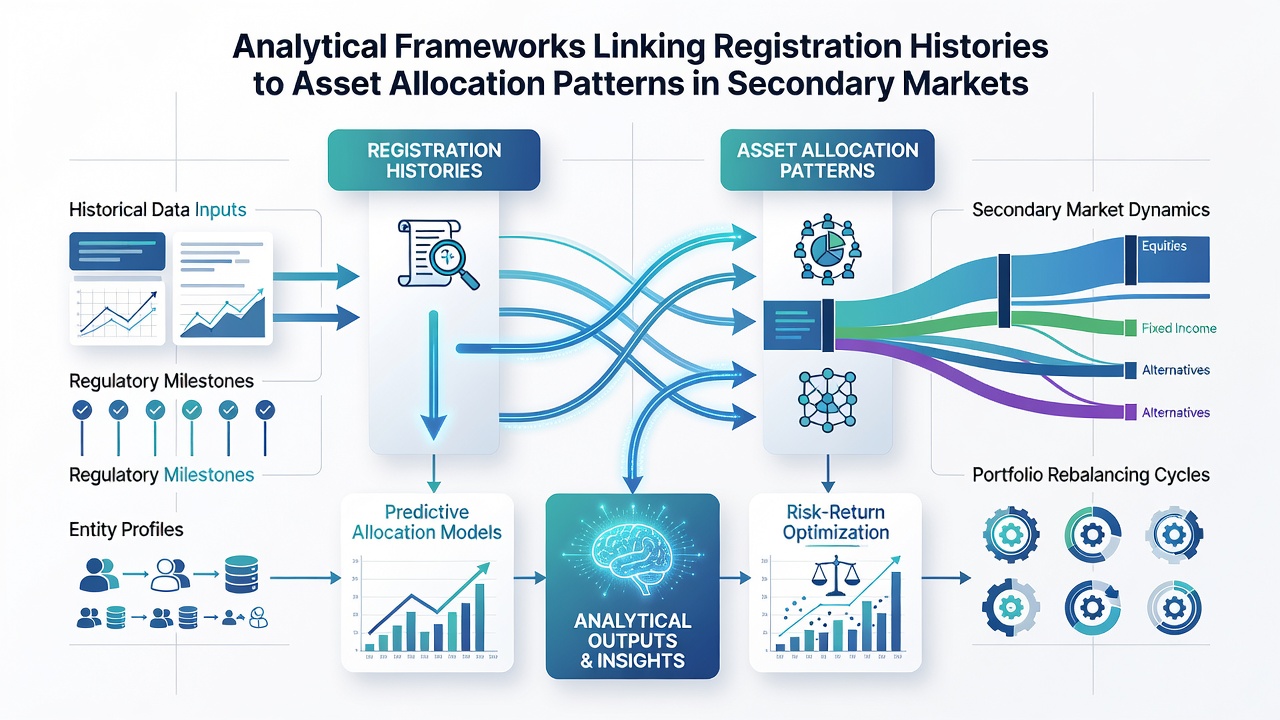
Analytical Frameworks Linking Registration Histories to Asset Allocation Patterns in Secondary Markets
Registration histories serve as foundational datasets in financial analysis, capturing sequences of ownership transfers, compliance filings, and regulatory approvals that precede trading activity on secondary markets. Analysts apply structured frameworks to connect these records with allocation decisions, where investors adjust portfolio weights based on historical patterns of asset performance and regulatory milestones. Data from exchanges and clearinghouses indicate that such linkages help quantify how early registration events influence liquidity and pricing dynamics once assets enter secondary trading phases.
Core Components of Registration History Analysis
Registration histories encompass timestamps for initial filings, amendments to ownership structures, and periodic disclosures required by oversight bodies. Frameworks organize these elements into timelines that highlight correlations with subsequent trading volumes and allocation shifts among institutional participants. Researchers at academic institutions have mapped these sequences against market data to identify recurring indicators, such as how delays in registration updates align with reduced allocation activity in certain asset classes. This approach draws on longitudinal records maintained by central depositories, allowing models to isolate variables like jurisdictional differences in filing requirements that affect downstream market behaviors.
Connecting Histories to Allocation Models
Asset allocation patterns emerge when portfolio managers review registration timelines alongside performance metrics from secondary markets. Quantitative frameworks employ regression techniques and network analysis to trace how specific registration events, including changes in beneficial ownership or compliance status, precede measurable reallocations across equities, fixed income instruments, and derivatives. Figures from regulatory repositories show that assets with streamlined registration sequences often attract steadier allocation inflows, whereas those with repeated amendments experience more volatile distribution among market participants. Observers note these patterns hold across multiple jurisdictions, where data aggregation from bodies like the U.S. Securities and Exchange Commission and the Australian Securities and Investments Commission supports cross-border comparisons of allocation responses.
Quantitative Techniques in Practice
Models integrate registration data through time-series analysis and machine learning classifiers that predict allocation probabilities based on historical sequences. One framework processes registration event logs to generate risk scores, which then feed into optimization algorithms used by fund managers to balance holdings in secondary market environments. Evidence from industry reports reveals that incorporating registration-derived variables improves the accuracy of allocation forecasts by accounting for regulatory friction points that standard pricing models overlook. Teams at research centers apply these methods to datasets spanning several years, revealing clusters where similar registration profiles correspond to synchronized allocation movements during periods of market stress.
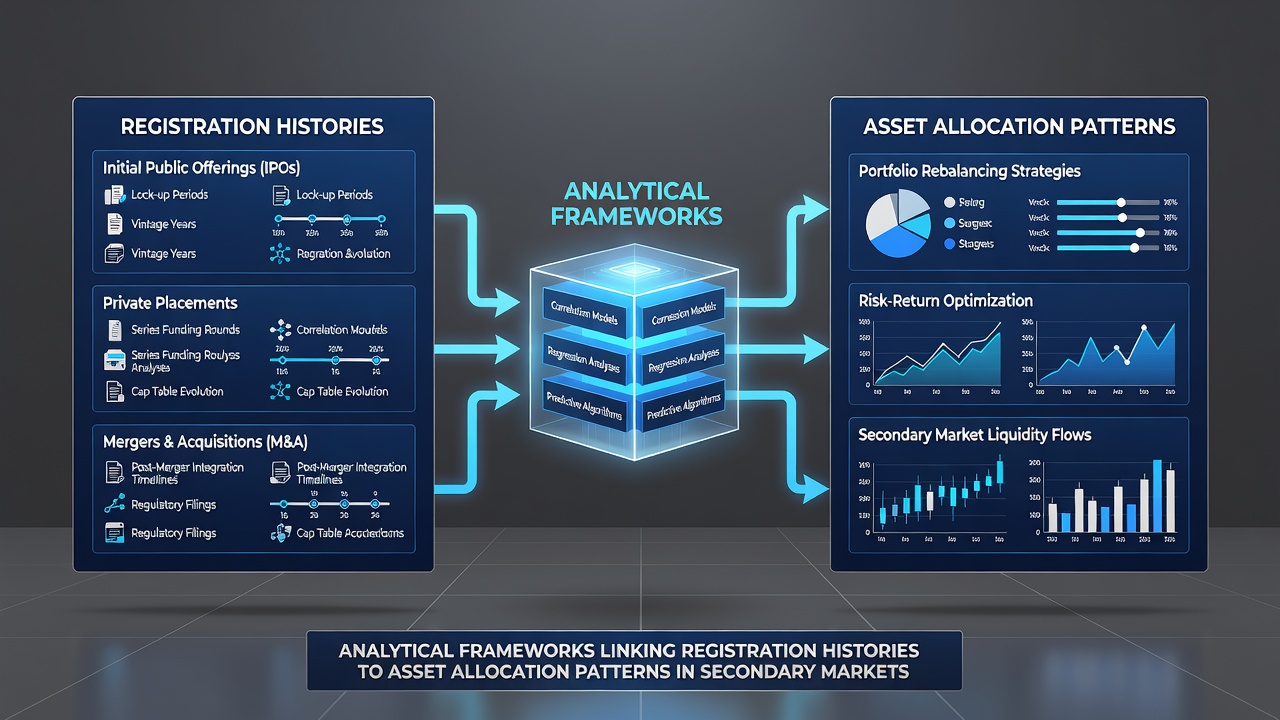
Regional Variations and Data Integration
Differences in registration protocols across regions shape how frameworks interpret allocation outcomes. In European markets, directives from the European Securities and Markets Authority standardize certain disclosure elements that feed directly into allocation models, while North American systems emphasize granular ownership tracking that highlights concentration risks. Analysts combine these sources with secondary market transaction records to build comparative tools, noting that registration completeness levels often predict allocation stability more reliably than isolated price signals alone. By August 2026, expanded data sharing initiatives among international regulators are expected to enhance the granularity of these integrated models, enabling finer distinctions in how registration histories influence cross-asset allocation strategies.
Applications in Portfolio Construction
Portfolio managers utilize these frameworks to adjust exposure levels in response to registration-derived insights, such as identifying assets whose histories suggest sustained secondary market participation versus those prone to liquidity gaps. Case studies from institutional settings demonstrate how overlaying registration timelines onto allocation matrices helps refine rebalancing schedules, reducing transaction costs associated with abrupt shifts. Data aggregation platforms facilitate this process by normalizing records from diverse registries into unified formats compatible with existing risk management systems. Those who have examined these linkages report improved alignment between predicted and realized allocation patterns when registration variables receive explicit weighting in decision protocols.
Conclusion
Analytical frameworks that link registration histories to asset allocation patterns provide structured methods for interpreting secondary market dynamics through regulatory and ownership records. Integration of these datasets supports more precise modeling across varied market conditions and jurisdictions. Continued refinement of data sources and analytical techniques sustains the utility of these approaches for participants navigating allocation decisions in evolving trading environments.