Balancing Renewal Timelines Across Varied TLD Portfolios for Steady Growth
Uma Klein · Jul 18, 2026
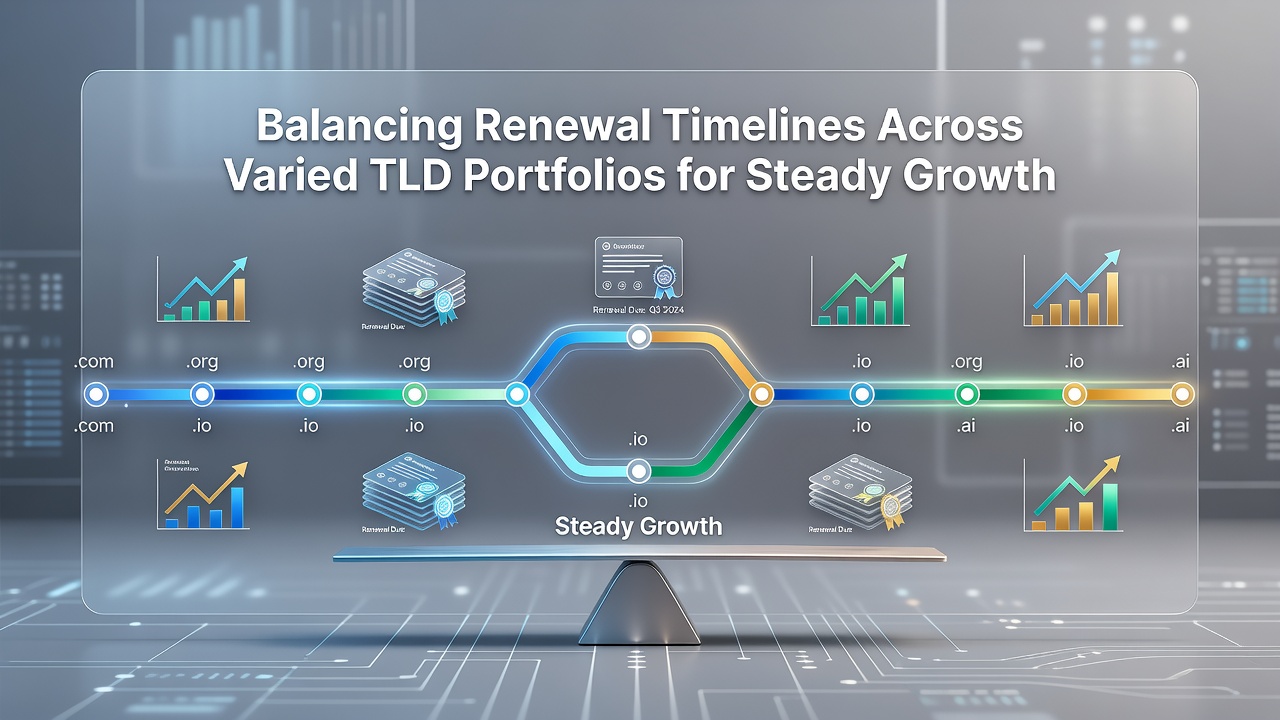
Balancing Renewal Timelines Across Varied TLD Portfolios for Steady Growth
Domain portfolios that span multiple top-level domains require careful coordination of renewal dates because registries operate under distinct policies, pricing structures, and grace periods. Managers track these variables to maintain consistent cash flow and avoid unintended lapses that disrupt SEO continuity or resale value.
Registries such as Verisign for .com and .net, Public Interest Registry for .org, and the growing list of new gTLD operators each set their own renewal windows and auto-renew defaults. Country-code TLDs add another layer since national registries in places like Canada and Australia follow separate administrative rules that sometimes include mandatory renewal notices sent weeks in advance.
Registry Differences Shape Renewal Planning
Operators who hold .com domains typically receive a 30-day auto-renew grace period after expiration, while many new gTLDs shorten that window to 15 or 20 days before redemption fees apply. Those managing mixed portfolios therefore map each TLD's exact timeline against internal budget cycles to prevent clusters of renewals from hitting the same quarter.
Data compiled by ICANN shows that portfolios exceeding 5,000 domains experience measurable cost spikes when renewal dates concentrate within narrow calendar windows. Spreading expirations across months reduces the size of individual renewal batches and keeps annual expenditure more predictable.
Methods for Aligning Expiration Dates
Portfolio managers often use bulk renewal tools that allow manual adjustment of expiration years on selected domains. Extending a .net name by two additional years, for instance, can shift its next payment date away from a crowded period dominated by .io or .co renewals. This technique works best when combined with real-time registry data feeds that flag upcoming billing cycles.
Some organizations integrate calendar-based alerts that pull expiration information directly from registrar APIs. Teams then review projected renewal costs alongside current market values to decide whether to shorten or lengthen registration periods on individual assets. The approach becomes especially useful after large acquisitions that introduce dozens of new TLDs into an existing collection.
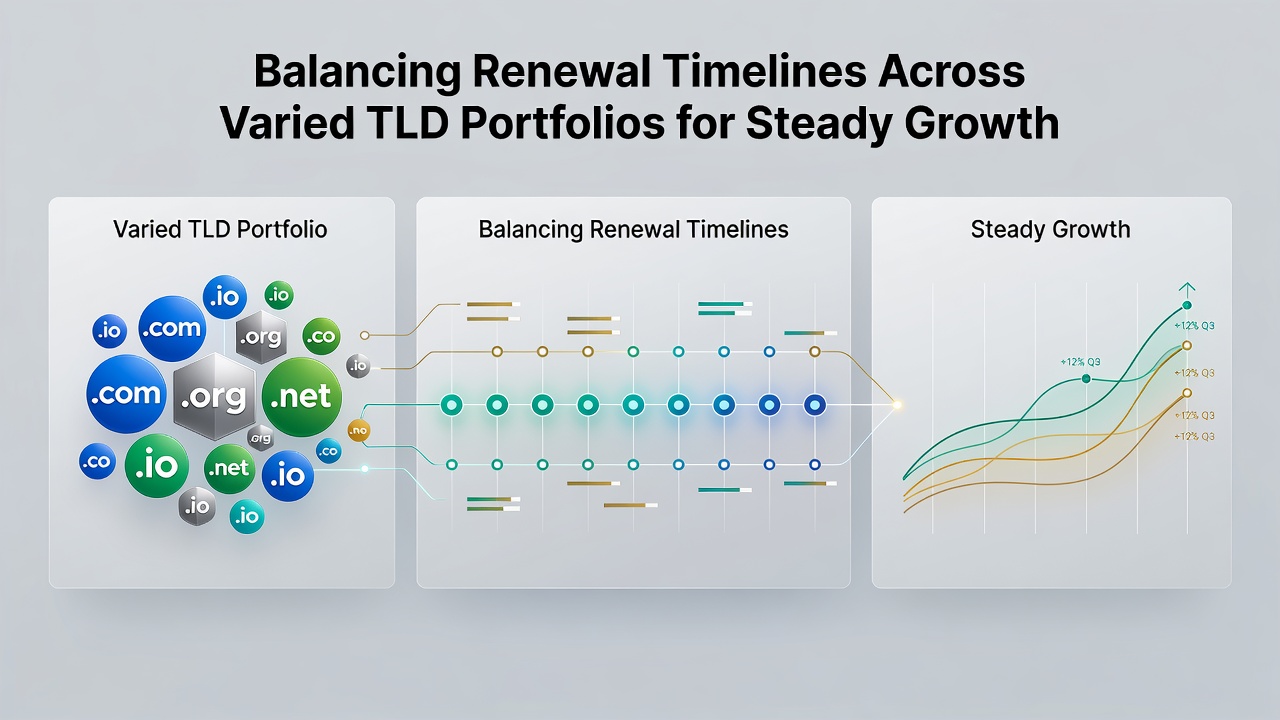
Financial Impact and Cash-Flow Modeling
Renewal fees vary significantly between legacy extensions and newer geographic or thematic TLDs. A .com renewal might cost $8–12 while certain .app or .dev names carry fees above $20. When dozens of high-fee domains renew in the same month, the sudden outflow can strain quarterly budgets. Observers note that organizations maintaining renewal calendars spaced at least 45 days apart report smoother cash-flow patterns throughout the fiscal year.
July 2026 marks the scheduled introduction of revised pricing schedules from several European ccTLD registries. Portfolio teams that already maintain staggered timelines will absorb those increases without creating concentrated payment spikes, whereas portfolios clustered around late-summer dates may face sharper short-term demands.
Technology Supporting Timeline Management
Modern domain-management platforms now include forecasting modules that project renewal costs across multi-year horizons. These systems factor in expected registry price changes, volume discounts offered by registrars, and historical redemption rates. Users can run scenarios that test the effect of moving groups of domains forward or backward by one renewal cycle.
Integration with accounting software further allows teams to allocate renewal reserves on a monthly rather than annual basis. This granular approach helps organizations maintain liquidity while still capturing early-renewal discounts that some registrars extend for payments made 90 days ahead of expiration.
Portfolio Growth Through Controlled Timing
Steady growth depends on the ability to reinvest capital released by selective sales or lower renewal batches into new acquisitions. When renewal obligations remain evenly distributed, managers retain flexibility to act on time-sensitive opportunities without first securing emergency funding for clustered expirations.
Researchers at academic centers studying digital asset management have documented correlations between evenly spaced renewal schedules and higher overall portfolio retention rates. The same studies indicate that concentrated renewal dates correlate with elevated lapse incidents during periods of market volatility.
Conclusion
Effective balancing of renewal timelines across varied TLDs rests on continuous monitoring of registry policies, disciplined use of scheduling tools, and forward-looking cash-flow models. Organizations that maintain these practices position their portfolios for consistent operational stability and measured expansion even as TLD ecosystems continue to evolve.