Balancing Risk Factors in Multi-Domain Holdings Through Systematic Valuation Updates and Strategic Divestitures
Sage Foster · Aug 27, 2026
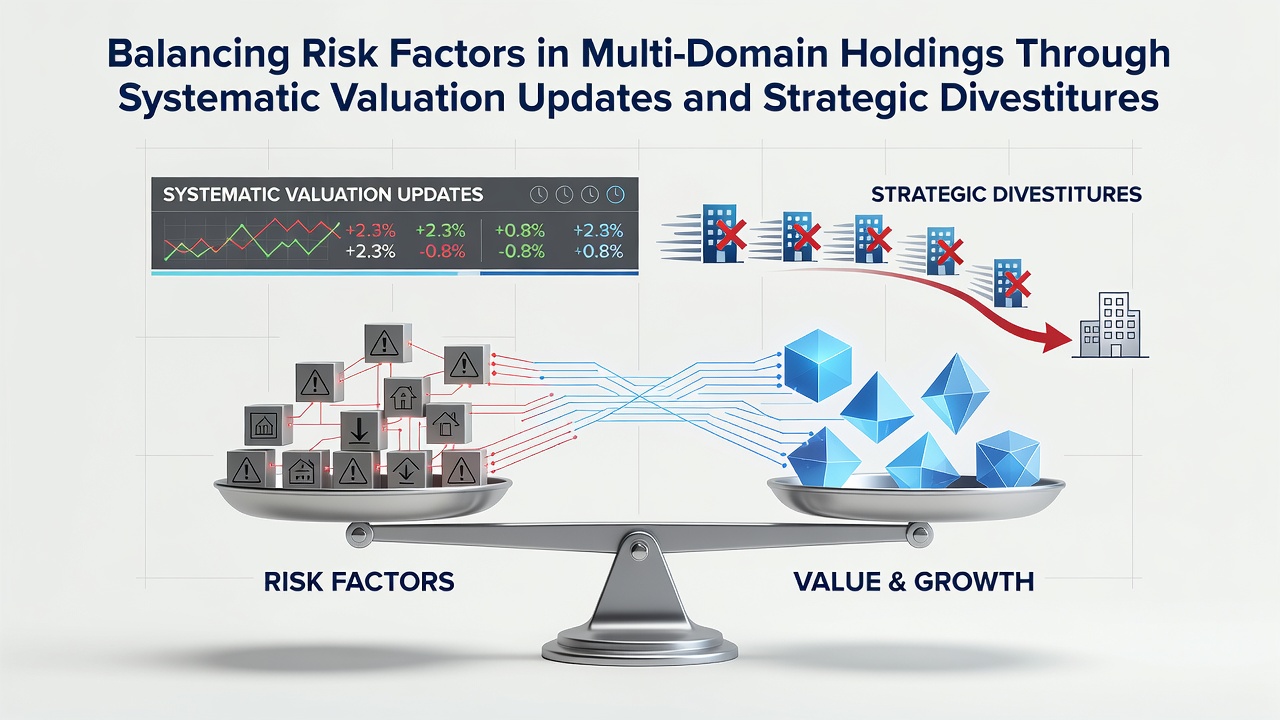
Balancing Risk Factors in Multi-Domain Holdings Through Systematic Valuation Updates and Strategic Divestitures
Domain portfolios require ongoing attention to market shifts, holding costs, and liquidity needs, and observers note that systematic valuation updates combined with targeted divestitures help maintain equilibrium across these variables. Research from digital asset studies shows that holdings spanning generic top-level domains and country-code extensions face distinct pressures from renewal fees, registration trends, and buyer demand cycles. Those who track these elements report that regular reassessment prevents concentration risks where a few high-value names overshadow broader exposure to underperforming assets.
Identifying Core Risk Factors in Domain Collections
Market volatility stands out as a primary concern because domain values fluctuate with search trends, brand launches, and regulatory changes in the DNS space. Data from industry reports indicate that renewal fee increases announced by registries can erode margins on marginal holdings, while sudden drops in aftermarket activity during economic slowdowns amplify liquidity shortfalls. Experts have observed that portfolios weighted toward emerging extensions encounter higher uncertainty than those anchored in established .com names, and figures reveal that geographic diversification across multiple registrars adds another layer of operational complexity through varying compliance requirements.
Holding costs accumulate steadily through annual renewals and potential premium pricing tiers, yet these expenses interact with opportunity costs when capital remains tied up in stagnant names. Analysts at research institutions have documented cases where prolonged retention of low-traffic domains coincided with missed acquisitions of higher-potential alternatives during peak auction periods. Strategic oversight therefore involves mapping each asset against projected cash outflows and comparing those projections against current market comparables.
Implementing Systematic Valuation Updates
Valuation protocols rely on multiple data inputs including comparable sales records, traffic analytics where available, and keyword search volume metrics. Organizations that conduct quarterly reviews integrate automated tools with manual appraisals to capture both quantitative signals and qualitative factors such as brandability. According to findings from a Canadian university study on digital asset management, portfolios updated at consistent intervals demonstrate lower variance in reported net asset values compared with those reviewed annually.
August 2026 brought renewed attention to valuation methodologies as several major registrars adjusted pricing structures for popular extensions, prompting portfolio managers to recalibrate models that previously relied on static renewal assumptions. These adjustments incorporated forward-looking estimates of buyer interest derived from trademark filing data and corporate rebranding announcements. The process typically sequences through automated screening of all holdings, followed by deeper analysis of outliers flagged for potential divestiture or retention decisions.

Executing Strategic Divestitures
Divestiture decisions hinge on predefined thresholds that trigger sales when valuations exceed internal benchmarks or when risk metrics indicate overexposure. Portfolio operators often segment holdings into core assets retained for long-term appreciation, tactical positions held for shorter cycles, and non-core names targeted for liquidation. Evidence from European digital economy analyses suggests that timed exits during periods of elevated aftermarket activity can offset cumulative holding costs across the remaining collection.
Platforms facilitating private sales and public auctions provide channels for orderly disposal, and data shows that listings accompanied by recent valuation documentation attract faster bids at narrower discount ranges. Those managing larger collections coordinate divestitures to avoid flooding specific niches, thereby preserving price stability for comparable names still under ownership. The timing of these moves frequently aligns with seasonal patterns in corporate domain acquisitions, which tend to accelerate toward fiscal year ends.
Integrating Valuation Data With Portfolio Strategy
Continuous feedback loops between updated valuations and divestiture actions allow adjustments to acquisition criteria for future purchases. When systematic reviews highlight segments with declining liquidity, managers redirect capital toward extensions or keyword categories showing stronger transaction velocity. Reports from the OECD on intangible asset trends underscore how such adaptive allocation reduces overall portfolio beta relative to broader digital marketplace movements.
Documentation of each valuation cycle supports compliance and audit requirements while also informing insurance coverage decisions for high-value names. Observers note that integrated systems linking valuation outputs directly to sales platforms streamline execution and reduce the lag between decision and completion. This integration proves especially relevant for collections crossing multiple jurisdictions where tax reporting obligations vary.
Conclusion
Systematic valuation updates paired with strategic divestitures form a structured approach to managing risk across multi-domain holdings. Data indicates that portfolios subject to regular review cycles exhibit more stable performance metrics over time. Organizations applying these practices align their asset mix with prevailing market conditions while controlling exposure to renewal cost inflation and demand shifts. The result is a framework that supports both preservation of existing value and selective redeployment of resources into emerging opportunities within the domain space.