Charting Cross-Border Legal Frameworks That Shape Expired Domain Bidding and Long-Term SEO Asset Management
Sage Foster · Jul 7, 2026

Charting Cross-Border Legal Frameworks That Shape Expired Domain Bidding and Long-Term SEO Asset Management
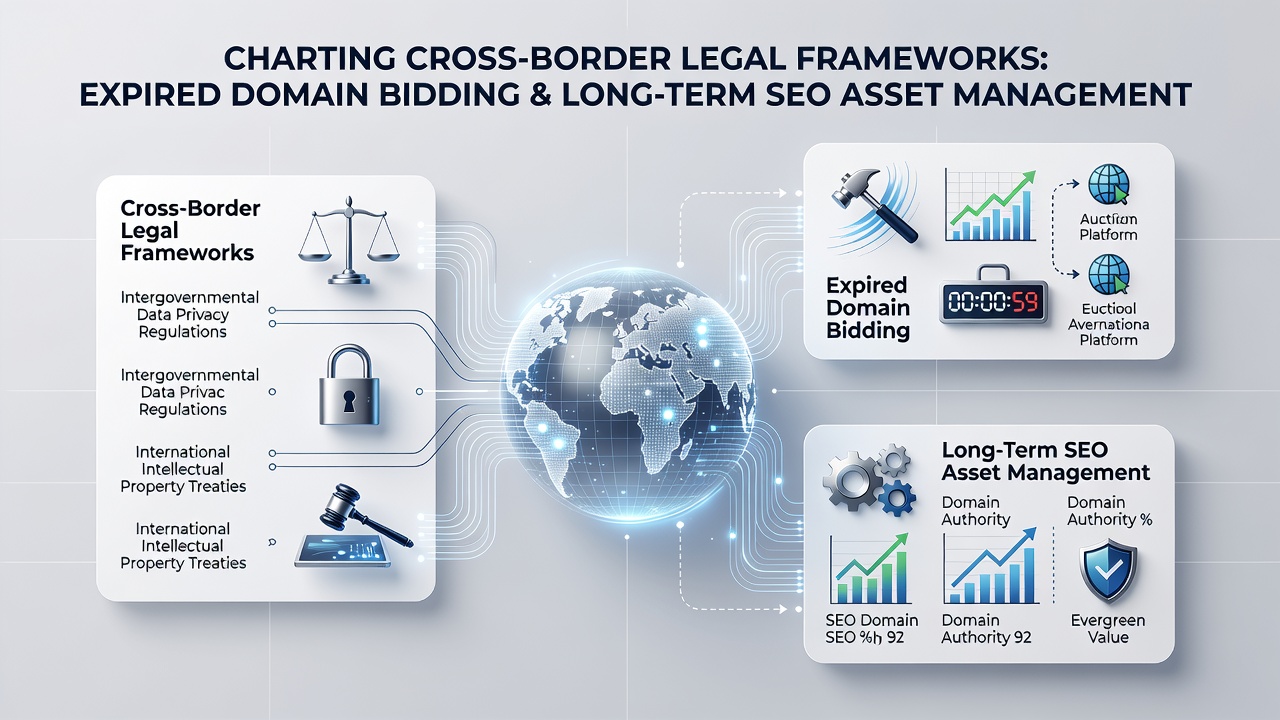
Expired domain bidding operates under layers of international rules that differ sharply by jurisdiction, and those who manage long-term SEO assets must track each layer because registration agreements, dispute policies, and data-protection statutes all intersect at the point of acquisition. Observers note that ICANN sets baseline requirements for registrars worldwide yet national laws impose additional obligations on ownership transfers, renewal rights, and content liability once a domain enters an SEO portfolio.
ICANN Policies and Their Reach Across Borders
ICANN maintains the Uniform Domain-Name Dispute-Resolution Policy together with the Expired Domain Deletion Policy, and these instruments apply uniformly to generic top-level domains regardless of where the bidder or the registrar is located. Researchers at the organization track registrar compliance through contractual enforcement, while regional governments retain authority over how those rules interact with local trademark, consumer-protection, and tax statutes. Data from ICANN's compliance reports shows that disputes involving expired names frequently cross multiple jurisdictions because the original registrant, the auction platform, and the winning bidder often reside in separate countries.
Regional Regulatory Variations That Influence Acquisition
European Union data-protection rules require registrars to publish or withhold registrant contact data under strict conditions, whereas Canadian and Australian frameworks emphasize transparency in WHOIS records for .ca and .au names. Bidders who acquire expired domains therefore face different disclosure obligations depending on the TLD, and failure to meet local standards can result in registration cancellation or fines. In July 2026, several European registrars plan to align their deletion schedules with updated eIDAS regulations, which will affect the timing of auction releases for .eu names and create new windows for cross-border participants.
Trademark offices in multiple jurisdictions maintain separate mechanisms for challenging domain registrations, so a name that clears UDRP review at WIPO may still face opposition under national law once the winning bidder activates it for SEO purposes. WIPO arbitration statistics indicate that cases involving lapsed domains have risen steadily since 2022, with many originating from registrants located outside the complainant's home country.
Valuation, Bidding, and Compliance Overlaps
Valuation models used by institutional bidders incorporate legal risk factors such as the probability of UDRP loss, the cost of local counsel, and the likelihood of registrar lock after an auction win. Those factors vary because some countries allow quick transfer of ownership while others impose waiting periods or require proof of legitimate interest. Auction platforms that operate globally must therefore segment their bidder pools by jurisdiction to avoid facilitating transactions that violate local rules.
Long-Term SEO Asset Management Under Multiple Legal Regimes
Once an expired domain enters a portfolio, its ongoing use for link placement or content redirection becomes subject to advertising, privacy, and unfair-competition laws that differ by target market. Portfolio managers therefore maintain jurisdiction-specific checklists that address everything from cookie-consent banners to disclosure requirements for affiliate links. Academic studies on digital-asset governance reveal that diversified portfolios spanning multiple TLDs encounter higher administrative overhead precisely because each extension carries its own renewal and dispute-resolution rules.
Tax authorities in several countries now classify domain portfolios as intangible assets subject to capital-gains reporting upon sale or transfer, which adds another compliance dimension to long-term holding strategies. Observers tracking enforcement actions note that cross-border transfers sometimes trigger reporting obligations in both the seller's and the buyer's jurisdictions, requiring coordinated filings to avoid double taxation.
Dispute Resolution and Enforcement Patterns
Enforcement outcomes depend on where the domain is registered and where the complainant files, because some national courts will enforce foreign arbitral awards while others require fresh litigation. The New York Convention facilitates recognition of WIPO decisions in many jurisdictions, yet local procedural hurdles can still delay implementation for months. Those who track enforcement data report that domains used in SEO networks appear in disputes more often when the names carry prior commercial history that overlaps with existing trademarks.
Conclusion
Cross-border legal frameworks continue to evolve as registrars, governments, and dispute-resolution bodies adjust policies to address expired-domain flows and the SEO strategies built upon them. Participants who map these frameworks jurisdiction by jurisdiction reduce exposure to cancellation, fines, and tax complications while preserving the operational flexibility required for long-term asset management.