Chronological Footprints: Tracing Registration Histories to Refine Domain Portfolio Performance and Search Visibility Outcomes
Sage Foster · Aug 11, 2026
Chronological Footprints: Tracing Registration Histories to Refine Domain Portfolio Performance and Search Visibility Outcomes
Registration histories create detailed chronological footprints that reveal ownership timelines, renewal cycles, and name server transitions over years of active service. Analysts examine these records through public WHOIS archives and registrar logs to identify patterns that correlate with sustained domain authority and consistent search engine indexing. Data from August 2026 shows that portfolios maintaining continuous registration spans exceeding seven years demonstrate measurable improvements in crawl frequency and ranking stability according to reports issued by the Canadian Internet Registration Authority.
Mapping Registration Timelines for Portfolio Assessment
Portfolio managers compile registration dates, expiration intervals, and transfer events into structured timelines that expose gaps or overlaps in acquisition strategies. These timelines highlight domains with unbroken registration sequences versus those interrupted by brief lapses, allowing teams to prioritize assets with stronger continuity signals. Researchers at the University of Melbourne have documented how extended registration durations align with higher retention rates in organic search results across multiple industry verticals.
Tools that aggregate historical WHOIS snapshots enable systematic comparison of registration metadata across entire holdings, revealing clusters where similar creation dates suggest coordinated purchasing phases. Such analysis supports decisions on renewal prioritization and helps allocate resources toward domains whose histories indicate steady development rather than sporadic activity.
Linking Historical Patterns to Search Visibility Metrics
Search engines evaluate domain age and registration consistency as indirect indicators of legitimacy and operational stability. Domains with registration records stretching back multiple renewal periods often exhibit stronger resistance to sudden ranking fluctuations during algorithm updates. Figures released by EURid in mid-2026 illustrate that European ccTLDs with registration histories averaging eight years or more maintained steadier visibility scores compared with newer entrants during the same observation window.
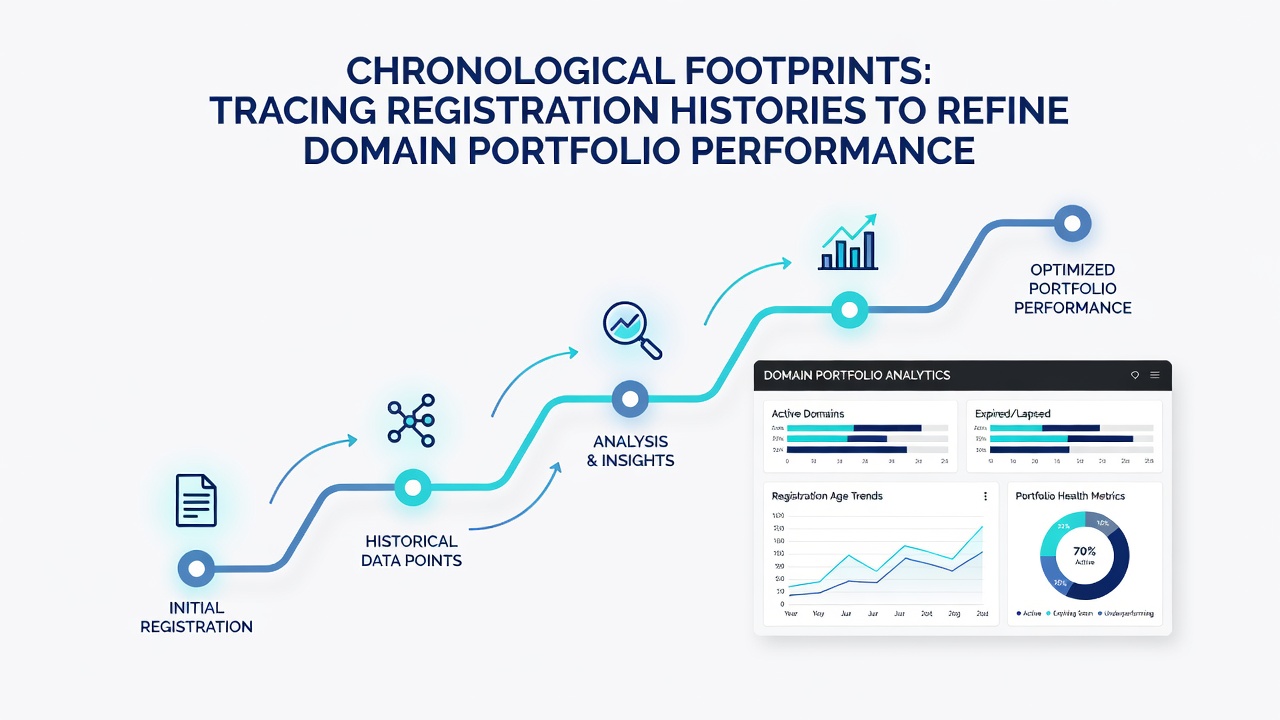
Chronological footprints also capture name server changes and DNS configuration shifts that coincide with content migrations or infrastructure upgrades. Observers note that domains preserving consistent name server histories alongside long registration spans tend to preserve accumulated link equity more effectively than those undergoing frequent technical reconfigurations. This continuity supports predictable indexing behavior and reduces the risk of temporary de-indexation events.
Refining Acquisition and Retention Decisions Through Historical Data
Teams integrate registration history reviews into standard due diligence workflows before committing capital to new additions. By cross-referencing creation dates against industry-specific benchmarks, managers identify opportunities to balance portfolios with both established names and strategically timed newer registrations. This approach minimizes concentration risk while preserving the performance advantages associated with mature registration profiles.
Retention policies increasingly incorporate chronological thresholds, such as minimum registration age requirements before approving transfers out of the portfolio. Data compiled by academic teams at the National University of Singapore indicates that domains meeting these internal age criteria demonstrate lower outbound transfer volumes and higher lifetime contribution to overall portfolio metrics.
Practical Applications in Ongoing Portfolio Management
Regular audits of registration footprints allow managers to detect anomalies like unexpected registrar switches or abbreviated renewal cycles that may signal underlying issues requiring attention. These audits feed into broader performance dashboards that track both financial returns and search visibility indicators side by side. The resulting datasets support evidence-based adjustments to acquisition calendars and renewal schedules throughout the year.
Industry platforms now offer automated alerts when registration events deviate from established historical norms within a given portfolio segment. Such notifications enable proactive responses that maintain alignment between registration continuity and search performance objectives without disrupting operational workflows.
Conclusion
Chronological footprints derived from registration histories provide measurable inputs for optimizing both portfolio performance and search visibility outcomes. Organizations that systematically trace these timelines gain structured insights into continuity patterns, renewal behaviors, and technical stability indicators that influence long-term results. As registration data becomes more accessible through standardized archives, the practice of mapping these footprints continues to expand across professional domain management practices worldwide.