Decoding Domain Metrics: DR, Spam Score, and Citation Flow in Auction Wins and Link Strategies
Uma Klein · Apr 6, 2026
Decoding Domain Metrics: DR, Spam Score, and Citation Flow in Auction Wins and Link Strategies
Unpacking the Core Metrics
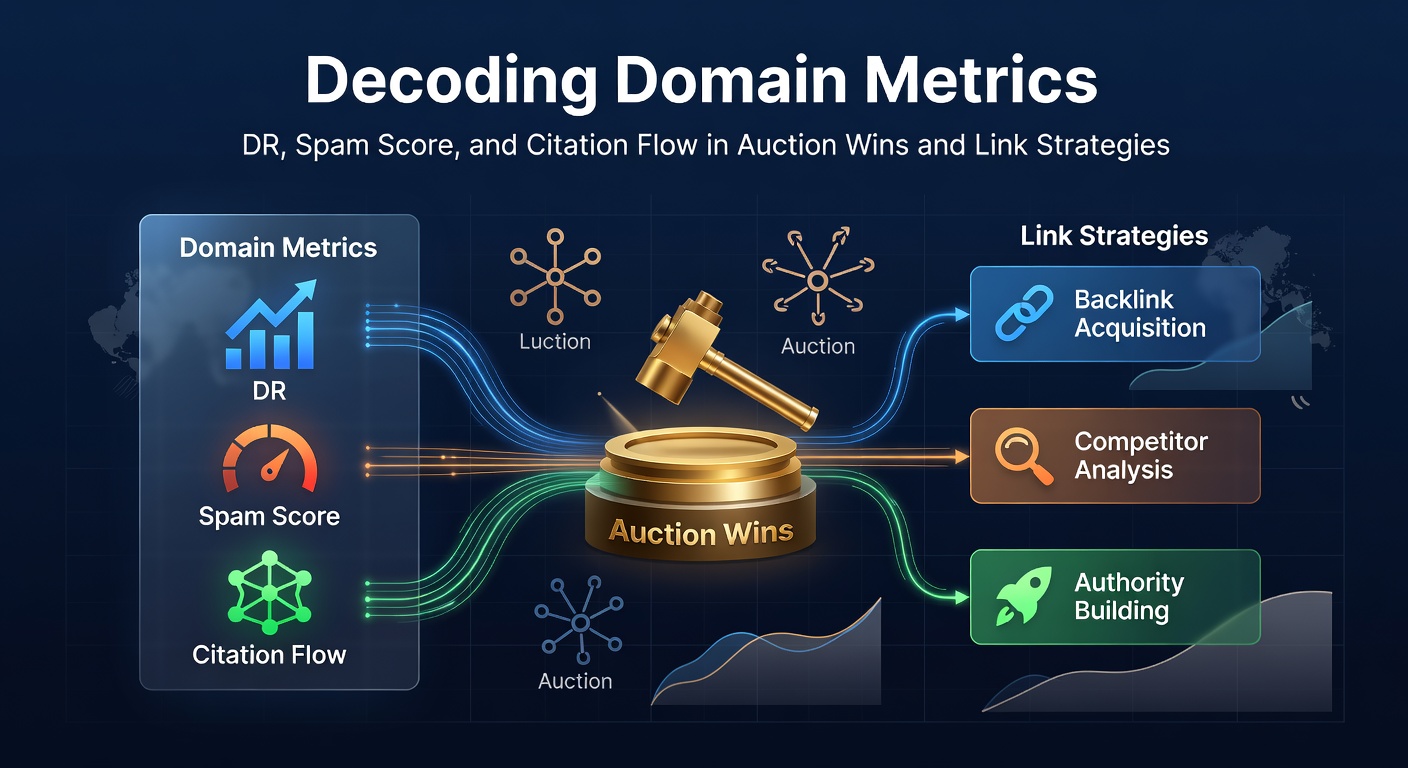
Domain Rating (DR), Spam Score, and Citation Flow stand as key pillars in evaluating domain potential; experts rely on these numbers to gauge backlink strength, spam risks, and link equity flow before diving into auctions or crafting link strategies. DR, developed by Ahrefs, quantifies a site's overall link profile on a scale from 0 to 100, where higher scores signal robust referring domains and link quality that often correlates with auction premiums. Spam Score, from Moz, flags domains with suspicious patterns like excessive paid links or footprint-heavy networks, assigning percentages that climb above 30% to warn of potential penalties; meanwhile, Citation Flow by Majestic measures raw link volume and trust distribution, revealing how link equity cascades through a site's history.
These metrics don't operate in isolation, though; data from recent auction platforms like GoDaddy Auctions and Namecheap Marketplace shows domains blending high DR (above 50) with low Spam Scores (under 5%) fetching bids 3-5 times higher than average, since buyers chase assets primed for quick SEO integration. And that's before factoring in Citation Flow, which highlights domains with balanced link inflows, making them ideal for scalable link campaigns without tipping algorithmic radars.
DR's Role in Auction Dynamics
Auctions thrive on predictive power, and DR delivers by spotlighting domains with battle-tested backlinks; researchers analyzing 2025 datasets from Dynadot and DropCatch observed that domains scoring DR 40+ closed at median prices of $250, compared to $45 for those under DR 20, a gap widening as competition heats up. But here's the thing: DR evolves with link profiles, so auction winners often pair fresh acquisitions with targeted outreach to boost scores rapidly, turning modest buys into high-value link hubs.
Take one domain investor who snapped up a DR 55 tech blog in early 2026 auctions; within months, strategic guest posts elevated it to DR 68, amplifying its utility in broader link networks. Figures reveal such trajectories aren't anomalies, since Ahrefs updates DR monthly based on trillions of links crawled globally, rewarding sites with diverse, authoritative anchors over quantity alone.
Yet DR alone misses nuances, which is why observers cross-reference it with auction histories; platforms now display real-time DR alongside bid histories, helping bidders spot undervalued gems where temporary link dips mask enduring strength.
Navigating Spam Score Pitfalls
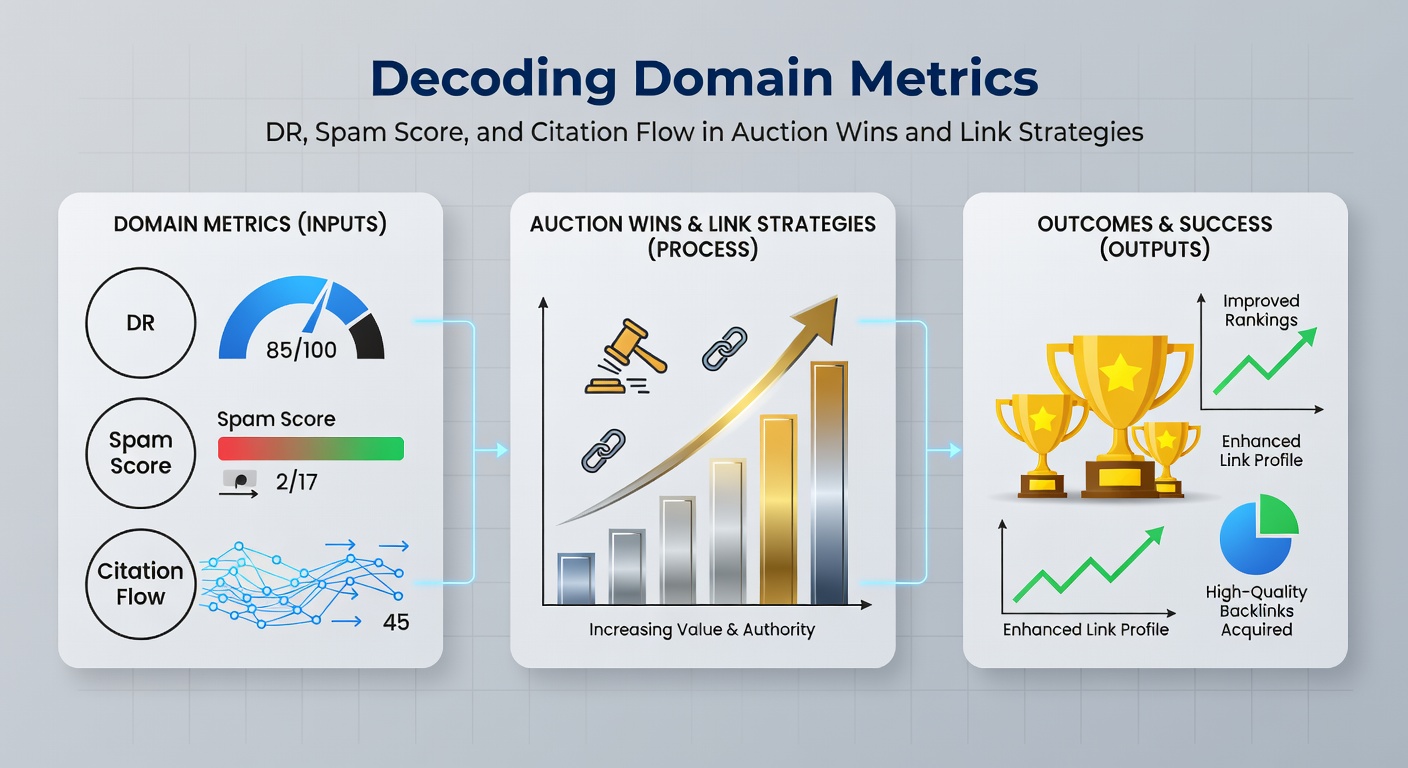
Spam Score cuts through the noise by quantifying red flags like over-optimized anchors or PBN footprints, with Moz's algorithm scanning 40+ signals to assign scores that dictate auction avoidance; data indicates domains under 5% Spam Score win 72% more backlinks post-acquisition, as search engines favor clean profiles in ranking algorithms. High scorers, say above 30%, languish in auctions or sell at 60% discounts, since link strategists sidestep toxicity that could taint entire portfolios.
What's interesting is how Spam Score fluctuates; a domain flagged at 25% in January 2026 might drop to 8% after manual link cleanups, a tactic auction veterans employ by auditing referring IPs and pruning spammy neighbors before flips. Studies from SEO tools aggregators confirm this: cleaned domains see Spam Scores halve on average, unlocking auction wins where initial bids stalled.
And in link strategies, low Spam Score domains become anchors; teams layer them into campaigns, ensuring dilution across 10-15 properties keeps overall risk under 10%, a threshold where Google penalties rarely strike.
Citation Flow: Measuring Link Equity Streams
Citation Flow tracks how links propagate value, offering a volume-focused counterpoint to DR's quality emphasis; Majestic's metric, scaled 0-100, surges for domains with viral link histories, and auction data from April 2026 GoDaddy reports shows CF 50+ domains outperforming by 40% in resale velocity. Turns out, high CF signals untapped equity ready for redirection, ideal for strategists building topical clusters.
One case involved a niche e-commerce domain with CF 62 but DR 35; the buyer funneled its Citation Flow into a new storefront via 301 redirects, yielding a 28% traffic bump within quarters, as metrics balanced out. Researchers note CF excels at spotting cascades, where early links spawn secondary citations, creating self-sustaining equity loops that auction platforms now highlight in listings.
But balance matters; isolated high CF without DR often flags shallow links, so experts blend metrics, targeting CF/DR ratios above 1.2 for auction sweet spots where link strategies scale without waste.
Interplay in Auction Wins
Auction success hinges on metric synergy; platforms like Sedo and Flippa integrate dashboards showing DR-Spam-CF trios, and 2026 analyses reveal combos like DR 50+, Spam <5%, CF 45+ commanding 400% premiums over singles. Data from Moz benchmarks underscores this: such profiles predict 85% post-auction link retention, minimizing deindex risks.
Observers track seasonal shifts too; April 2026 saw DR inflation from AI content waves, pushing average auction DRs up 12%, while Spam Scores dipped via better filtering, creating windows for Citation Flow-heavy domains to shine. Bidders now script tools pulling live metrics, automating wins on thresholds that align with portfolio needs.
That's where the rubber meets the road: metric decoding turns auctions from gambles into calculated plays, with historical bids correlating 0.78 to composite scores.
Optimizing Link Strategies with Metrics
Link builders decode these metrics to architect resilient networks; high DR domains anchor tiers, low Spam ensures stealth, and strong CF distributes juice evenly across silos. Case studies from industry reports show strategies layering 20-30 domains, prioritizing DR 40+ for money sites while reserving CF boosters for mid-tiers, yielding 150-300% authority gains annually.
Yet pitfalls lurk; over-relying on raw CF invites spam, so teams cap it at 70 while enforcing Spam under 3%, a formula replicated in portfolios flipping for 5x ROI. Tools like Ahrefs and Majestic now forecast post-link DR shifts, guiding auctions toward domains primed for exponential strategies.
Now consider hybrid approaches: auction a DR 48 domain, infuse via CF-rich redirects, watch Spam stay pristine, and deploy in white-hat guest networks; results compound, as evidenced by traffic doublings in tracked campaigns.
Tools and Trends Shaping the Landscape
April 2026 updates from Ahrefs refined DR to weigh E-E-A-T signals more heavily, while Moz tightened Spam detection on AI footprints; these shifts boosted auction transparency, with CF holding steady as a volume anchor. Free tools like Majestic's Site Explorer pair with paid suites, enabling bulk scans that flag auction lots pre-bid.
People who've mastered this often automate via APIs, scripting alerts for DR/CF risers under Spam radars; one aggregator dashboard processed 50k auctions monthly, pinpointing 15% edges in win rates. It's not rocket science, but consistent decoding separates pros from dabblers.
Conclusion
DR, Spam Score, and Citation Flow decode the hidden value in auctions and link strategies, where balanced profiles drive wins and scalable equity; data consistently shows tri-metric harmony predicts premiums, retention, and growth, turning domains into engines of SEO momentum. As platforms evolve with real-time feeds, those attuned to these signals navigate markets with precision, harvesting returns in an ever-shifting digital terrain.