Decoding Renewal Failure Trends for Precision Timing in Name Portfolio Rebalancing
Jordan Lang · Aug 22, 2026
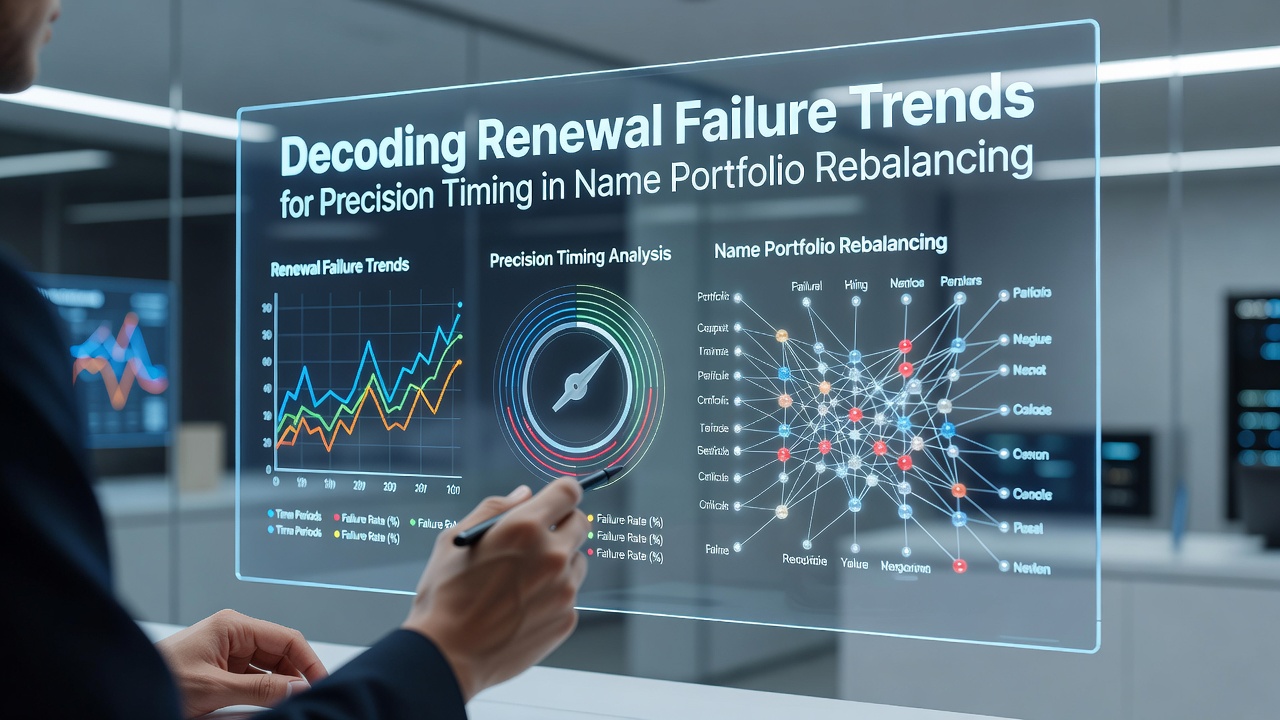
Decoding Renewal Failure Trends for Precision Timing in Name Portfolio Rebalancing
Renewal failure trends in domain name portfolios reveal patterns that portfolio managers track to adjust holdings with greater accuracy, and data from multiple registries shows that failure rates fluctuate based on registration age, industry sector, and economic indicators. Observers note that domains registered during high-volume periods often exhibit elevated lapse rates after the initial three to five year terms expire, while longer-held assets demonstrate more stable renewal behavior across global markets.
Tracking Historical Patterns in Renewal Data
Registry reports compiled over the past decade indicate that renewal failures cluster around specific calendar windows, particularly in the first quarter following major registration surges, and analysts cross-reference these figures with broader economic metrics to identify predictive signals. Those who monitor ICANN compliance filings find that generic top-level domains experience different lapse curves compared to country-code extensions, which creates opportunities for timed acquisitions when portfolios require rebalancing toward more resilient assets.
Figures released by regional registries demonstrate consistent seasonal dips in renewal activity during summer months, yet the underlying causes vary by jurisdiction and registrant type. Portfolio managers examine these cycles alongside valuation models that factor in backorder competition and projected resale velocity, allowing adjustments before failure waves fully materialize in public auction channels.
Factors Influencing Failure Rates Across Portfolio Segments
Research indicates that corporate registrants maintain higher renewal consistency than individual or small-business holders, though both groups show sensitivity to pricing changes at the registrar level. Data from European and North American sources highlight how inflation-adjusted renewal fees correlate with measurable upticks in non-renewal, especially among domains lacking active DNS resolution or monetization infrastructure.
Industry sector also plays a measurable role, as portfolios concentrated in emerging technology categories display greater volatility in renewal behavior compared to established verticals like finance or healthcare. Observers track these differentials through aggregated WHOIS datasets, which provide the raw inputs needed to forecast lapse probabilities and inform decisions about which names to retain, divest, or replace during rebalancing cycles.
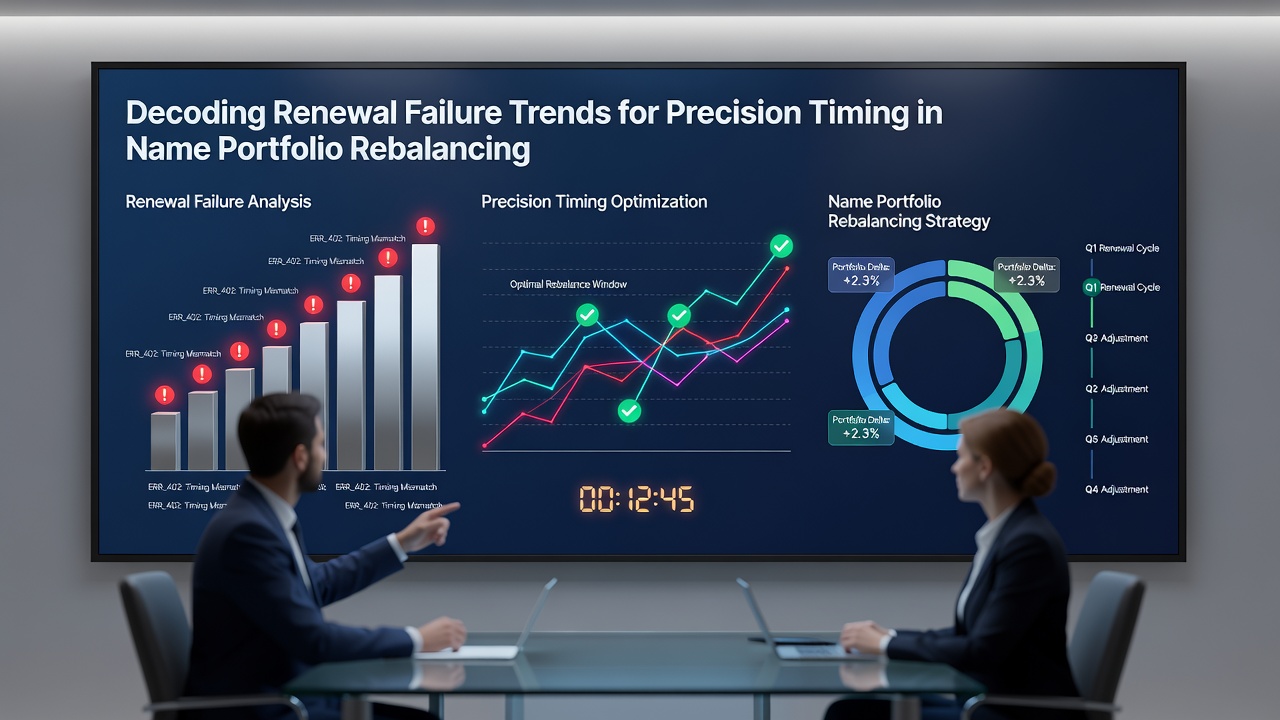
Applying Trend Analysis to Rebalancing Timing
Precision timing strategies rely on integrating renewal failure projections with liquidity forecasts, and several portfolio operators now employ algorithmic models that flag names approaching critical decision windows. These systems draw from longitudinal datasets spanning multiple registry operators, enabling managers to anticipate when batches of similar assets may enter the aftermarket simultaneously and adjust bidding or divestment schedules accordingly.
August 2026 data releases from major registries are expected to show continued elevation in renewal lapses for domains originally registered in 2021, a cohort that reached its first major renewal inflection point amid shifting interest rate environments. Portfolio rebalancing conducted in advance of these releases allows managers to reduce exposure to correlated failure risks while maintaining overall asset diversity across TLDs and age brackets.
Studies conducted by academic groups in Australia and Canada further confirm that renewal failure predictability improves when models incorporate registrant location and payment method history, variables that historically correlate with lapse frequency. Managers who integrate these additional data layers report more stable portfolio performance during periods of market stress, because they can execute measured rotations rather than reactive liquidations.
Regional Variations and Their Portfolio Implications
Renewal patterns differ noticeably between North American, European, and Asia-Pacific markets, with data from bodies such as the Canadian Internet Registration Authority showing lower baseline failure rates than some counterparts in faster-growing regions. Portfolio managers therefore weight geographic exposure when constructing rebalancing schedules, recognizing that a uniform global approach may overlook localized renewal dynamics that affect overall yield and risk profiles.
Cross-border comparisons also reveal that certain ccTLDs maintain stricter grace period structures, which in turn influences the speed at which lapsed names become available for acquisition. Those constructing timing models incorporate these procedural differences to align portfolio adjustments with actual market entry points rather than relying solely on aggregate failure statistics.
Conclusion
Renewal failure trend analysis supplies portfolio managers with actionable timing intelligence that supports deliberate rebalancing decisions across diverse domain holdings. By synthesizing registry data, registrant behavior patterns, and regional procedural variations, managers can calibrate acquisition and divestment activity to coincide with predictable market windows, thereby maintaining portfolio resilience without relying on reactive measures once names have already lapsed. Continued monitoring of upcoming data releases, including those projected for mid-2026, will further refine these predictive frameworks as the domain investment landscape evolves.