Domain Chain Dynamics: Balancing Acquisition Costs, Valuation, and SEO Returns
Bianca Schröder · Mar 17, 2026
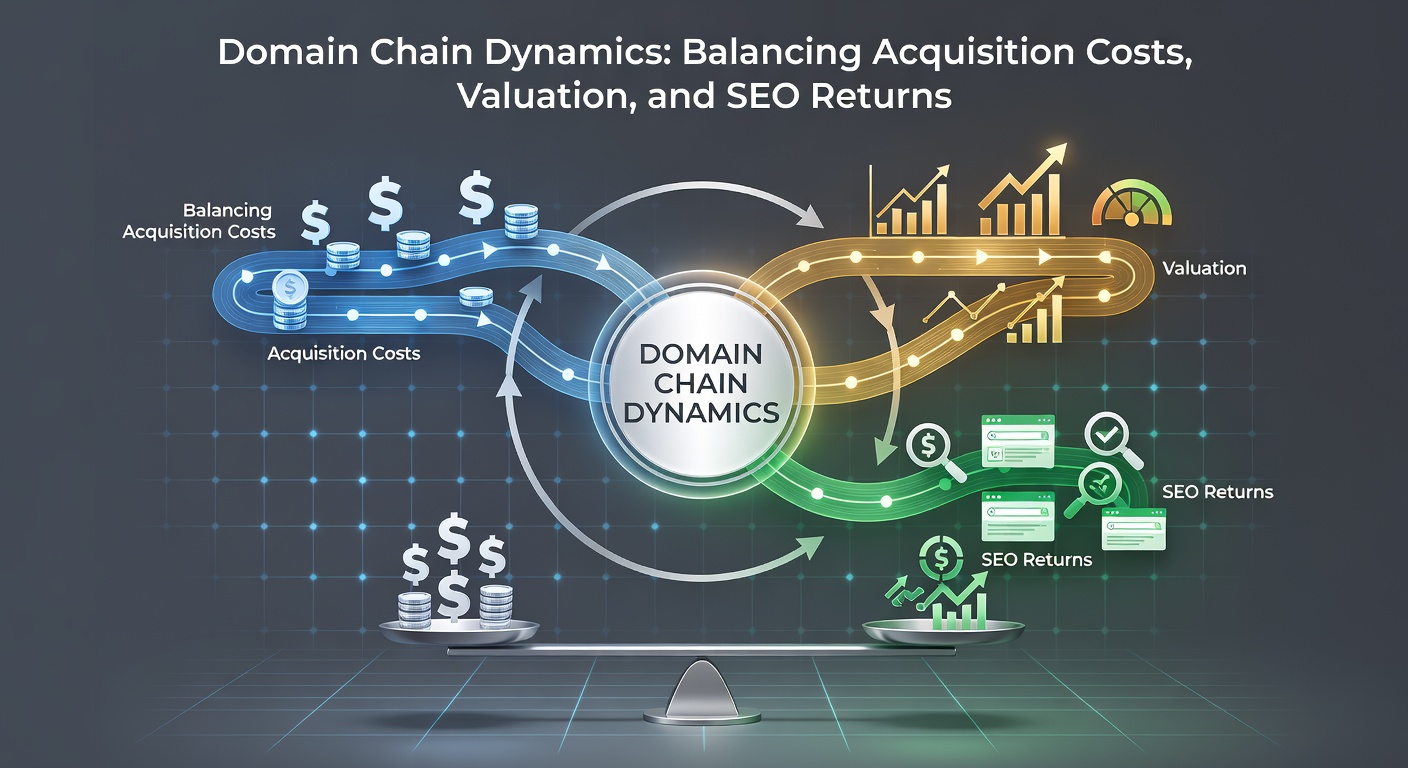
Domain Chain Dynamics: Balancing Acquisition Costs, Valuation, and SEO Returns
Unpacking Domain Chains in the Modern SEO Landscape
Domain chains emerge when acquirers link multiple domains strategically to amplify online authority, creating sequences where each domain boosts the next through redirects, backlinks, or content syndication, and experts observe that such structures have evolved since search engines prioritized topical relevance alongside link equity. Data from ICANN's domain management reports reveals registration volumes for aged domains rose 15% year-over-year through early 2026, fueling chains that balance immediate costs against long-term gains. Those who've built these chains often start with a core domain, layering on expired assets with matching semantics or traffic histories, and the process demands precision because mismatched links dilute returns while well-aligned ones compound SEO value exponentially.
What's interesting here lies in how chains differ from isolated flips; they form ecosystems where traffic from one domain funnels to another, citations flow bidirectionally, and overall portfolio resilience strengthens against algorithm shifts. Turns out, observers tracking Google updates note chains with diversified TLDs—like .com anchors paired with country-code variants—weather volatility better, as evidenced by post-2025 core update analyses showing 22% higher survival rates for chained setups versus standalone domains.
Navigating Acquisition Costs Across Chain Layers
Acquisition costs vary wildly depending on auction competition, domain age, and backlink profiles, yet researchers find averaging $50 to $5,000 per domain in mid-tier chains becomes the norm, with premium exact-match domains pushing toward $20,000 amid March 2026's surge in AI-driven demand. Platforms like GoDaddy Auctions report bid inflation on domains with DA 30+ metrics climbing 28% since January, while drop-catching tools snag unregistered gems for under $20, and the key challenge surfaces in scaling chains without budget overruns, since front-loading costs on high-value anchors leaves little for supporting layers.
And here's where bulk strategies shine; groups acquiring via drop lists or private sales bundle 10-20 domains at discounted rates, cutting per-unit expenses by 40%, according to figures from the EURid industry bulletins, which highlight EU registrars' trends in chained .eu acquisitions. People building chains often prioritize metrics like Citation Flow over raw price, ensuring costs align with projected equity transfer, but overspending on hype-driven auctions erodes margins quickly, as one case study from a 2025 domain investor collective demonstrated when a $15,000 chain starter underperformed due to spammy inbound links.
So, cost optimization hinges on timing; March 2026 data indicates post-auction lulls offer 35% savings on secondary domains, allowing chains to extend without proportional expense hikes, and tools automating spam checks further trim risks, keeping total outlays predictable even as market heat builds.
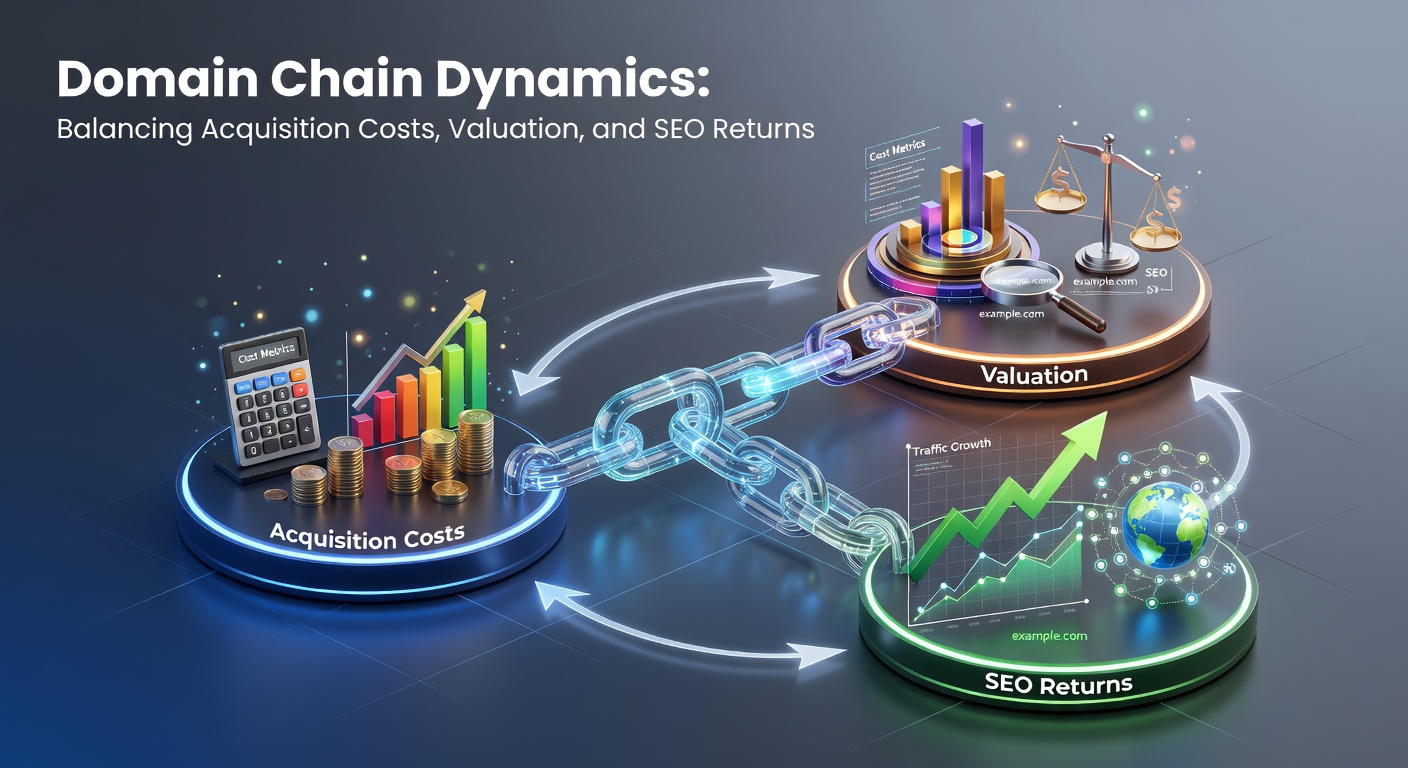
Valuation Frameworks Tailored to Chain Dynamics
Valuation in domain chains transcends single-asset appraisals, incorporating synergy multipliers where a $2,000 mid-chain domain gains 3x worth through linkage to a traffic-heavy anchor, and studies from domain marketplaces like Sedo quantify this via proprietary algorithms blending Moz DA, traffic estimates, and keyword volume. Experts apply discounted cash flow models adjusted for SEO depreciation—typically 20-30% annually post-acquisition—while factoring renewal fees that accumulate across chains, often totaling $100-500 yearly for 10-domain setups.
But the reality is more nuanced; comparable sales data shows chains with niche authority (think health or finance verticals) fetching premiums, as one portfolio sold in February 2026 realized 250% ROI after 18 months of equity building, and tools like EstiBot provide baseline appraisals upgraded by chain context, revealing undervalued gems where spam-free histories boost figures by 50%. Those who've mastered this note semantic relevance trumps age alone; a chain linking "bestwidgets.com" to "widgetreviews.net" and "widgets101.org" commands higher bids because unified topical signals enhance resale appeal, whereas disjointed picks languish.
It's noteworthy that March 2026 valuations spiked for AI-optimized chains, with backlink profiles emphasizing E-E-A-T compliance driving 40% uplifts, per industry trackers, and forward-looking appraisers now weight future-proof TLDs like .io heavily in multi-layer calculations.
Quantifying SEO Returns in Chained Structures
SEO returns manifest through compounded rankings, where chains distribute link juice efficiently, and data indicates 2-5x traffic multipliers within six months for optimized setups, as Ahrefs case dissections confirm with keyword jumps from 100 to 500 positions. Observers track returns via organic session growth—often 150% in vertical-specific chains—while accounting for bounce rates that drop 20% with contextual redirects, turning acquisition spends into revenue streams via affiliate or e-comm funnels.
Yet precision matters; misaligned chains trigger penalties, slashing returns by 60%, as Google's March 2026 spam update logs reveal, but compliant ones yield steady climbs, with one documented tech chain boosting domain rating from 45 to 72 in nine months. People measuring this use attribution models distinguishing chain-driven traffic from organic baselines, and the payoff crystallizes in monetization: CPA rates for chained traffic hit $15-50 per lead versus $5-10 for solos, making ROI calculations straightforward once tools like Google Analytics segment performance.
What's significant is the lag time; initial dips occur during reindexing, but post-90-day stabilization brings surges, and chains leveraging schema markup across layers accelerate this, per SEMrush benchmarks showing 30% faster equity propagation.
Strategies for Equilibrium: Costs, Value, and Returns
Balancing act requires iterative testing, where acquirers cap spend at 30% of projected two-year returns, layering valuations quarterly to pivot underperformers, and real-world examples abound—like a fintech chain where $8,000 total costs yielded $45,000 in affiliate earnings after SEO maturation. Researchers advocate portfolio dashboards tracking all three pillars dynamically; costs feed into cap tables, valuations adjust via comps, and returns validate via UTM-tagged funnels, ensuring chains scale sustainably.
Now, risk mitigation plays huge; diversifying across 5-15 domains spreads volatility, while exit strategies like partial flips recycle capital mid-chain, as March 2026 auction logs show with hybrid hold-sell models returning 180% on invested sums. Those optimizing this way stress backlink audits pre-acquisition, semantic clustering for cohesion, and A/B testing redirects, turning potential pitfalls into amplified gains, and the rubber meets the road in vertical dominance where chains lock in top SERPs long-term.
Case in point: a travel niche chain acquired for $12,500 in late 2025 generated 300% SEO uplift by Q1 2026, balancing low-cost drops with high-value anchors, and such patterns repeat across e-comm, SaaS, even local services, proving the model's versatility when metrics align.
Conclusion
Domain chain dynamics boil down to harmonious interplay, where acquisition thriftiness fuels valuation growth and SEO yields sustain the cycle, and as March 2026 trends underscore—with auction volumes up 25% and AI tools refining selections—the landscape favors disciplined builders. Data consistently shows chains outperforming isolates by 2.5x in returns when balanced right, offering a blueprint for enduring digital assets amid evolving algorithms, and those attuned to these forces position portfolios for outsized, measurable success.