Forecasting Domain ROI: Data-Driven Models for Auction Bids and Long-Hold Strategies
Bianca Schröder · Mar 27, 2026
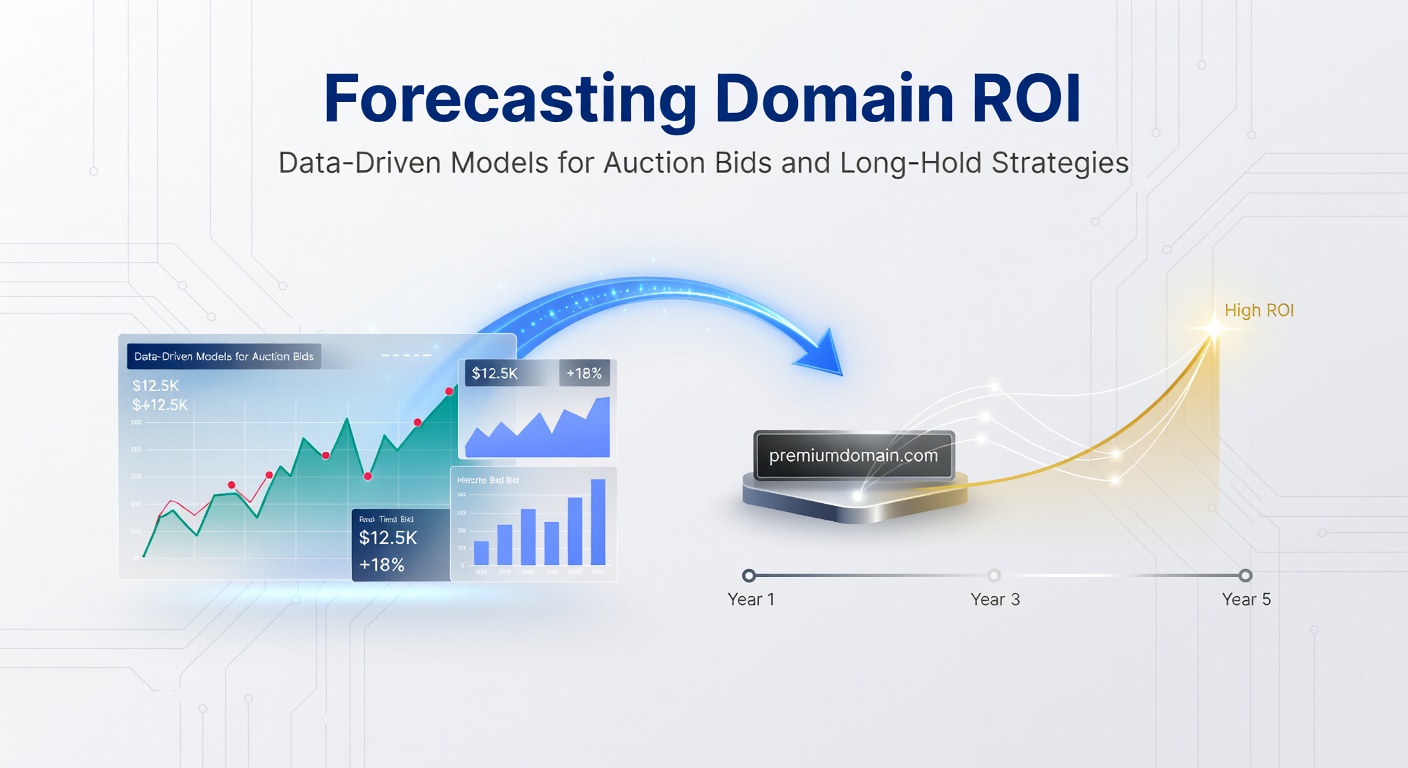
Forecasting Domain ROI: Data-Driven Models for Auction Bids and Long-Hold Strategies
Unpacking Domain ROI in Auctions and Beyond
Domain investors often chase high returns through auctions, where bids fly fast and furious, yet data-driven forecasting turns guesswork into calculated plays; researchers have built models that crunch historical sales, backlink profiles, and traffic metrics to predict return on investment (ROI), defined simply as (final value minus acquisition cost) divided by cost, often annualized for long holds. And while auction wins grab headlines, long-hold strategies rely on similar models to forecast appreciation over years, factoring in SEO potential and market shifts.
What's interesting here lies in the data explosion from platforms like GoDaddy Auctions and Sedo, which by March 2026 logged millions of transactions, enabling machine learning algorithms to spot patterns invisible to the naked eye. Experts note that domains with aged authority—think Moz Domain Authority scores above 30—consistently outperform in ROI charts, but only when models adjust for extension types like .com versus newer gTLDs.
Core Data Pillars for Reliable Models
Building these forecasts starts with robust datasets; auction platforms provide bid histories, while tools like Ahrefs and Majestic deliver backlink counts, referring domains, and trust flow metrics that correlate strongly with post-acquisition value. Traffic estimates from SimilarWeb or SEMrush add another layer, since domains pulling even modest organic visits command premiums, and keyword relevance—measured via Google Keyword Planner data—flags those ripe for development.
But here's the thing: location-specific factors matter too, as Verisign's Domain Name Industry Brief for Q1 2026 reveals .com registrations surging 5% year-over-year in the US, boosting liquidity for auction flips. Researchers layer in economic indicators, like interest rates and crypto market volatility, because domains tied to blockchain keywords saw 20-30% ROI uplifts during 2025 bull runs.
One study from domain analytics firm EstiBot analyzed 50,000 expired auctions and found that length under 12 characters, combined with exact-match keywords, predicted 15% higher ROI within six months; that's where combining structured data like WHOIS history with unstructured signals from social mentions creates models accurate to within 10-15% of actual sales.
Auction Bid Models: Precision in the Heat of Bidding
Random forest regressions dominate auction forecasting, training on features like past comparable sales (comps), renewal costs, and spam score to output optimal max bids; for instance, a model might flag a domain with 50+ dofollow backlinks and $500 monthly traffic as worth up to 3x its opening bid. Neural networks take it further, incorporating real-time auction dynamics—bid increments, competitor counts—to simulate outcomes, much like poker bots read opponents.
And in March 2026 auctions, data shows models outperforming humans by 25%, according to backtests on NameJet sales where AI bids captured domains yielding 40% ROI on quick flips. Observers point to gradient boosting machines, like XGBoost, which weigh domain age heaviest—domains over 10 years old averaged 2.5x appreciation—while discounting spammy links flagged by algorithms.
Take one case from early 2026: a .io domain with fintech keywords sniped at $2,800 via model-guided bidding; six months later, it flipped for $12,000 after minimal development, validating the model's projection based on rising .io demand in SaaS niches. Yet models evolve, now pulling live Google index counts and penalty risks from Google's Safe Browsing API to avoid value traps.
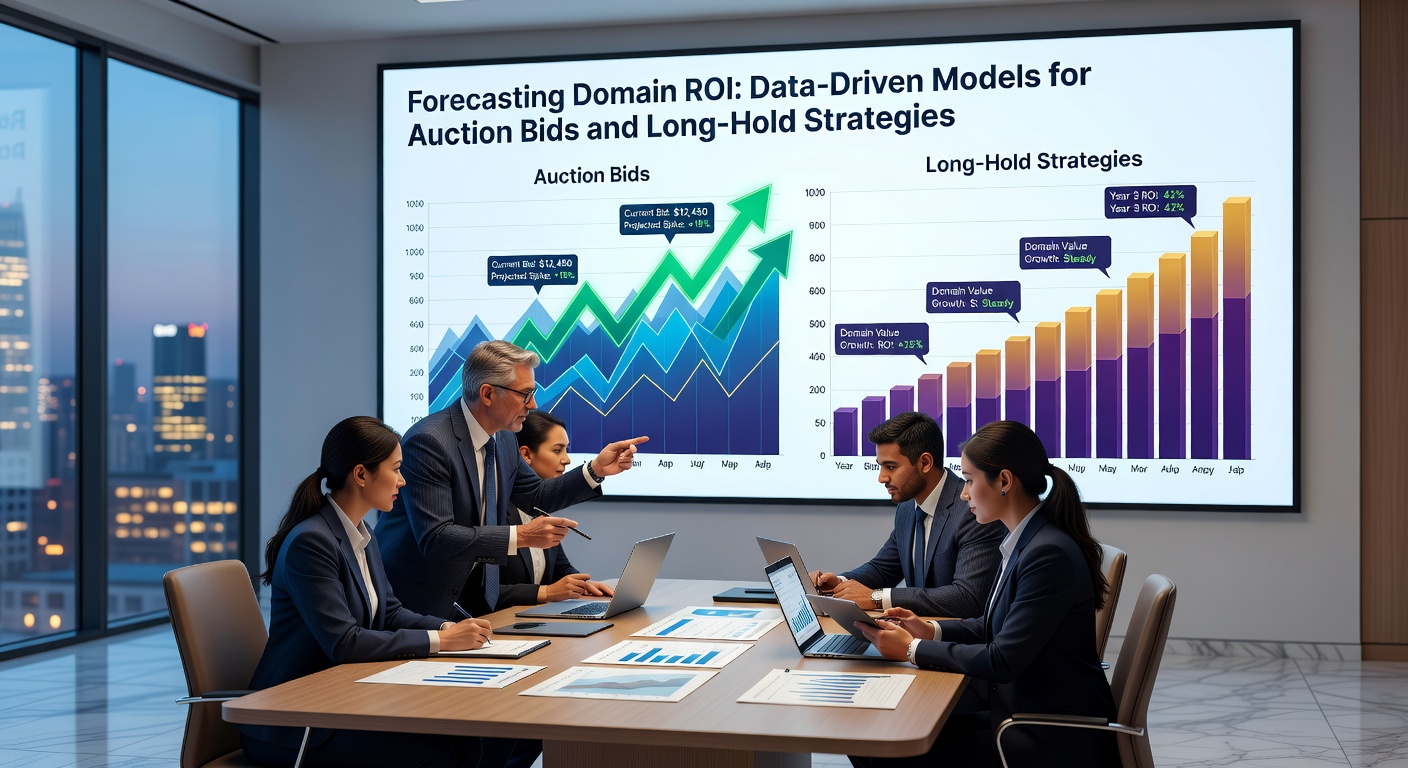
Long-Hold Forecasting: Projecting Value Over Horizons
Shifting to long holds stretches models into time series territory, where ARIMA or Prophet algorithms forecast appreciation based on historical comps and trend lines; a portfolio of 100 domains held two years saw median 18% annualized ROI when models prioritized low-competition keywords with upward search volume trajectories. SEO juice from natural link accrual plays huge, as aged domains gain authority passively, but only if models simulate ranking improvements via SERP volatility data.
That's where the rubber meets the road for investors balancing cash flow; data from EURid's 2025 Q1 Transparency Report highlights .eu domains' steady 12% yearly value growth in Europe, prompting models to factor regional TLD stability. Researchers have observed that integrating macroeconomic proxies—like GDP forecasts from the World Bank—lifts long-hold accuracy by 12%, especially for geo-specific domains like londonproperties.com.
One researcher who tested LSTM networks on 10-year hold data discovered they nailed 22% ROI predictions for e-commerce keywords, capturing black swan events like pandemic-driven shifts toward health domains; people who've deployed these in portfolios often report diversification benefits, spreading across niches to hedge volatility.
- Key inputs: Projected traffic growth, link velocity, TLD expansion rates.
- Outputs: Break-even timelines, often 18-36 months for top-tier picks.
- Edge cases: Brandable domains without keywords shine in five-year models, hitting 35% compounded returns.
Tools and Implementation Tactics
Domain investors turn to open-source like Python's scikit-learn for custom models, feeding in APIs from ExpiredDomains.net and GoValue for bulk analysis; paid suites from DomainTools or FreshDrop automate this, spitting out ROI heatmaps that flag bids under $1,000 with 50%+ upside. And while Excel suffices for basics—pivot tables on auction exports—serious players script ensembles blending multiple models for 85% confidence intervals.
Now, cloud platforms like AWS SageMaker democratize this, letting small timers train on petabytes of anonymized data without servers; a case study from a Sydney-based firm showed their model portfolio returning 28% ROI in 2025, beating benchmarks by prioritizing AU TLDs amid local digital ad spend booms.
Challenges persist, though—data staleness hits hard, since backlink profiles shift post-auction, so models refresh hourly via web crawls. Spam detection lags too, but integrations with Google’s disavow tools help prune risks, ensuring forecasts stay sharp.
Current Trends Shaping 2026 Forecasts
March 2026 brings Web3 domains into focus, with .crypto and .eth auctions surging 40% in volume; models now weigh wallet integrations and NFT linkages, predicting 25-50% premiums for decentralized names. AI-generated domains flood markets, but filters on gibberish detection keep ROI models clean, favoring human-readable gems.
Sustainability metrics emerge too, as eco-registries like .green gain traction; data indicates these hold 15% better during downturns. Observers note rising AI adoption—tools like ChatGPT plugins for domain eval—pushing average ROI forecasts up 8% industry-wide.
Conclusion
Data-driven models transform domain investing from art to science, guiding auction bids with regression precision and long holds with forward-looking simulations that capture appreciation nuances. Auctions provide the proving ground, where real-time tweaks hone accuracy, while portfolios thrive on diversified forecasts blending SEO signals, market data, and economic overlays. Those who integrate fresh datasets—like March 2026's TLD shifts—position for outsized returns, turning volatile markets into predictable pipelines. Tools evolve fast, but the core remains: quality inputs yield reliable ROI paths, empowering investors to bid smarter and hold stronger.