Mapping Registration Histories: Using Past Data Patterns to Guide Purchases and Portfolio Growth in Search-Optimized Ventures
Sage Foster · Jun 27, 2026
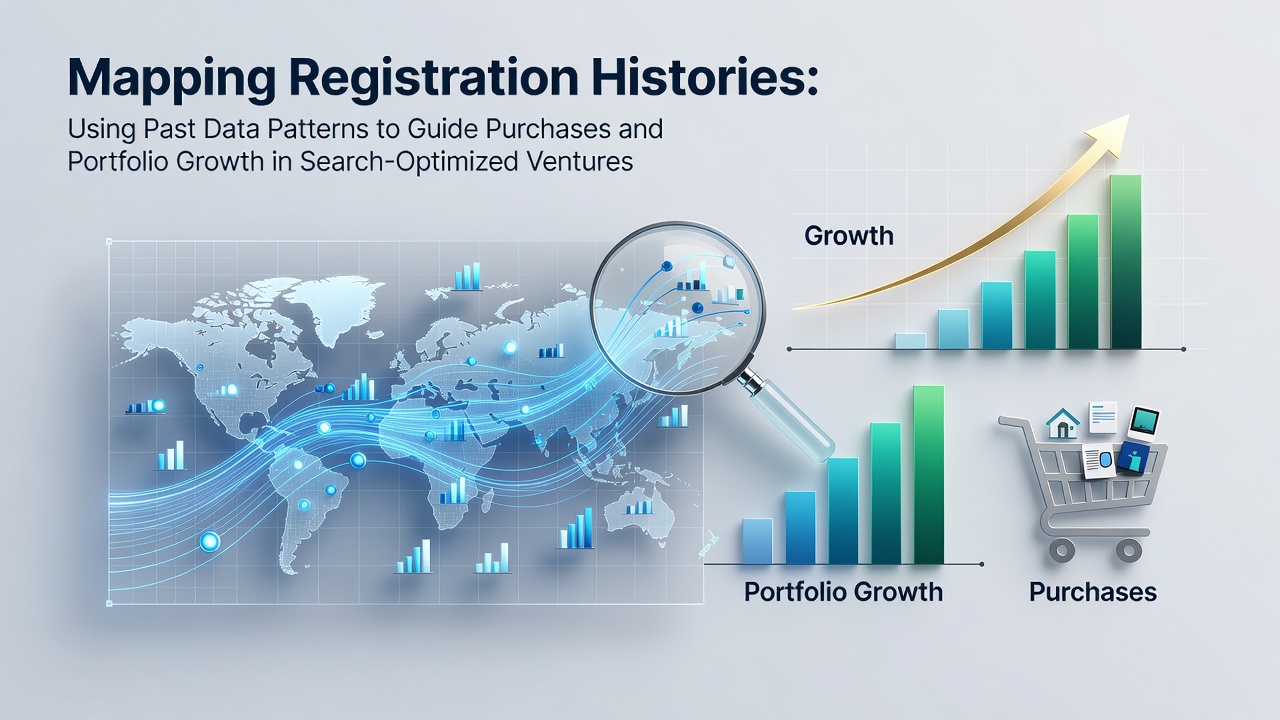
Mapping Registration Histories: Using Past Data Patterns to Guide Purchases and Portfolio Growth in Search-Optimized Ventures
Registration histories provide structured records of domain creation dates, ownership transfers, renewal cycles, and expiration events that analysts examine to identify trends in digital asset performance. Researchers at institutions focused on internet infrastructure track these sequences across millions of entries, revealing correlations between early registration clusters and subsequent value fluctuations in search-optimized portfolios. Data from registry logs shows consistent patterns where domains registered during specific market expansions maintain measurable differences in backlink accumulation compared to those added later.
Core Components of Registration Data Analysis
Analysts compile timelines from public WHOIS archives and registry databases to map creation bursts, which often align with industry shifts such as the introduction of new top-level domains. These maps highlight intervals where multiple similar names entered the system simultaneously, allowing portfolio managers to compare performance metrics across cohorts. Observers note that patterns emerging from 2015 through 2020 demonstrate higher retention rates for names with repeated renewal activity before any transfer occurs.
Cross-referencing expiration dates with auction outcomes supplies additional layers, since domains that cycle through multiple registrants within short windows exhibit distinct authority signals in search indexing. Government reports from bodies like the Australian Communications and Media Authority document how such cycling affects overall ecosystem stability, while academic studies quantify the statistical weight of continuous registration streaks exceeding five years.
Pattern Identification Techniques in Practice
Software tools aggregate historical snapshots to flag anomalies such as sudden registration spikes in niche keyword categories or geographic concentrations tied to regional business growth. Teams reviewing these outputs apply clustering algorithms that group domains by shared registration eras, then overlay search visibility data to measure outcomes. Figures from industry reports indicate that portfolios built around names registered before major algorithm updates frequently sustain steadier traffic trajectories than newer acquisitions.
One research initiative at a Canadian university examined over 200,000 domains and isolated variables including the interval between initial registration and first content deployment, finding measurable links to long-term indexing consistency. Portfolio managers integrate these variables into decision matrices that weigh acquisition timing against projected growth curves derived from past cohort behavior.

Integration with Purchase Decision Frameworks
Buyers consult mapped histories to filter prospects by registration longevity and ownership continuity before committing capital, since extended unbroken records correlate with established indexing baselines according to multiple registry analyses. Procurement protocols now incorporate automated flags for names showing repeated drops and re-registrations, which data sets associate with higher volatility in search ranking stability. European regulatory filings on domain markets provide benchmarks that help calibrate these filters against broader market movements observed through 2025.
Valuation models factor in registration density within keyword verticals, adjusting bid parameters when historical patterns reveal oversupply periods that suppressed returns in prior cycles. Teams that apply these adjustments report alignment between predicted and realized metrics when cross-checked against independent traffic logs.
Portfolio Scaling Through Historical Benchmarks
Scaling strategies rely on segmenting existing holdings by registration vintage to identify underperforming cohorts that may benefit from targeted expansion in complementary eras. Data visualizations of renewal success rates across decades guide allocation toward vintages that previously demonstrated resilience during economic contractions. In June 2026, updated registry releases continue to feed these models with fresh expiration forecasts, enabling proactive adjustments ahead of anticipated release waves.
Portfolio managers also track cross-border registration trends documented in reports from organizations such as the Internet Corporation for Assigned Names and Numbers, noting how international patterns influence domestic search optimization outcomes. These global data streams support decisions to diversify holdings across multiple registration windows rather than concentrating in single time clusters.
Conclusion
Registration history mapping supplies quantitative foundations for acquisition and expansion choices within search-optimized ventures by converting archival sequences into actionable performance indicators. Continued aggregation of registry and archive sources sustains the refinement of these approaches as new data layers accumulate through successive market phases.