Ownership Lineage Analysis as a Predictor for Successful Asset Rotation in Digital Property Portfolios
Jordan Lang · May 30, 2026
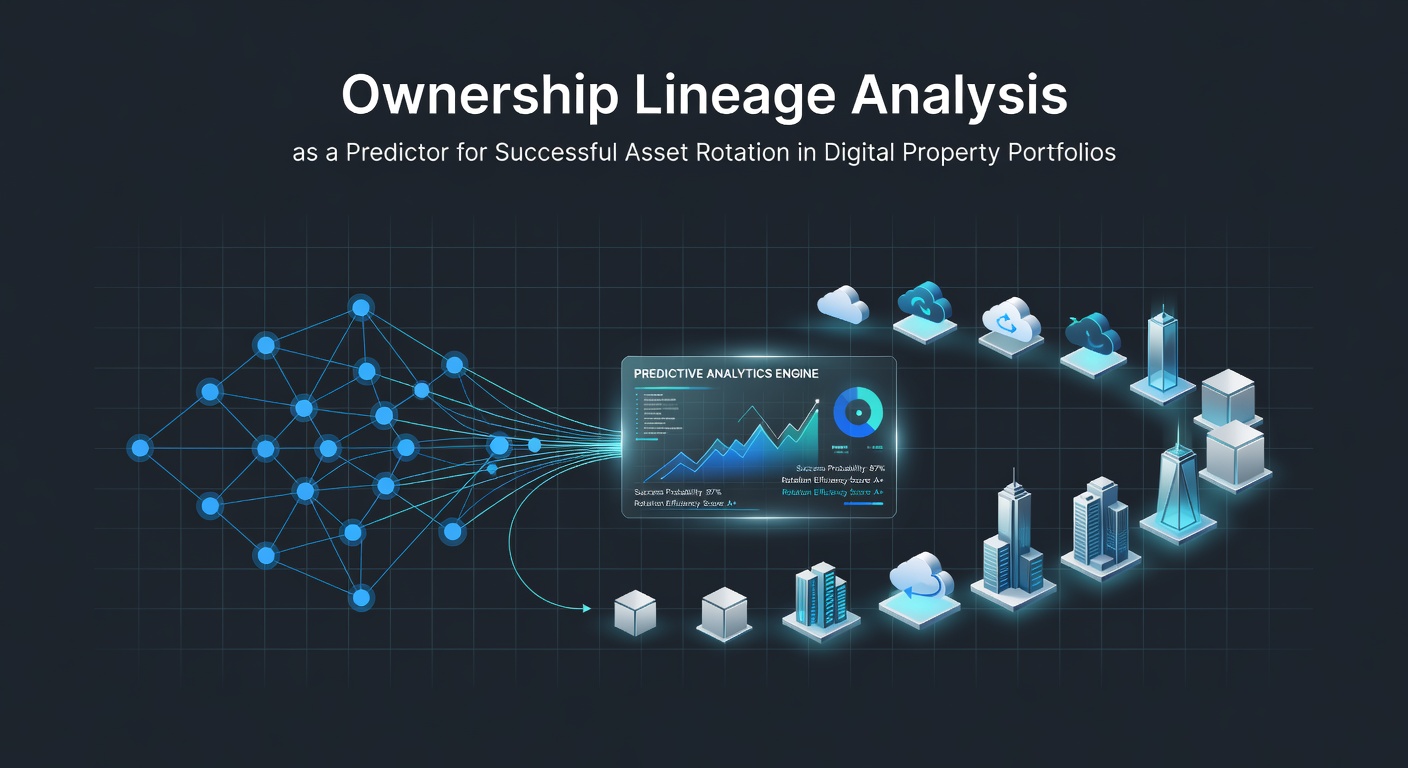
Ownership Lineage Analysis as a Predictor for Successful Asset Rotation in Digital Property Portfolios
Ownership lineage analysis tracks the complete chain of title transfers for digital assets such as domain names, intellectual property rights, and virtual holdings, and portfolio managers apply this method to forecast rotation outcomes where assets move between acquisition, holding, and divestment phases. Data from transaction registries indicates that assets with documented ownership sequences spanning multiple custodians exhibit measurable differences in liquidity timing compared to those with fragmented or opaque histories, while patterns emerge when analysts correlate prior transfer intervals with subsequent valuation shifts.
Tracing Transfer Histories in Digital Asset Records
Registry databases maintained by organizations like ICANN compile sequential ownership entries that include timestamps, entity identifiers, and jurisdictional markers, and analysts compile these entries into lineage maps that reveal clustering around certain holding periods. Researchers at the University of Melbourne published findings in 2024 showing that digital properties passing through three or more distinct registrants within a five-year window demonstrated accelerated turnover rates during subsequent market cycles, whereas assets retaining single-entity control for longer stretches aligned with extended holding phases before rotation events.
Lineage mapping incorporates metadata such as renewal patterns and escrow involvement, and these layers allow portfolio systems to flag assets whose histories include repeated short-term custodianship. Observers note that such flags correlate with earlier divestment opportunities in rotation schedules, since historical transfer velocity often precedes periods of elevated market interest.
Data Integration for Rotation Forecasting
Portfolio platforms combine lineage datasets with valuation indices and transaction volume statistics, then apply regression models that treat ownership duration and transfer frequency as independent variables. Evidence from the Canadian Intellectual Property Office registry reveals that assets with at least two documented ownership changes between 2018 and 2023 produced higher average rotation yields when managers timed exits within twelve months of the most recent transfer, and these results held across multiple asset classes including domain portfolios and digital content licenses.
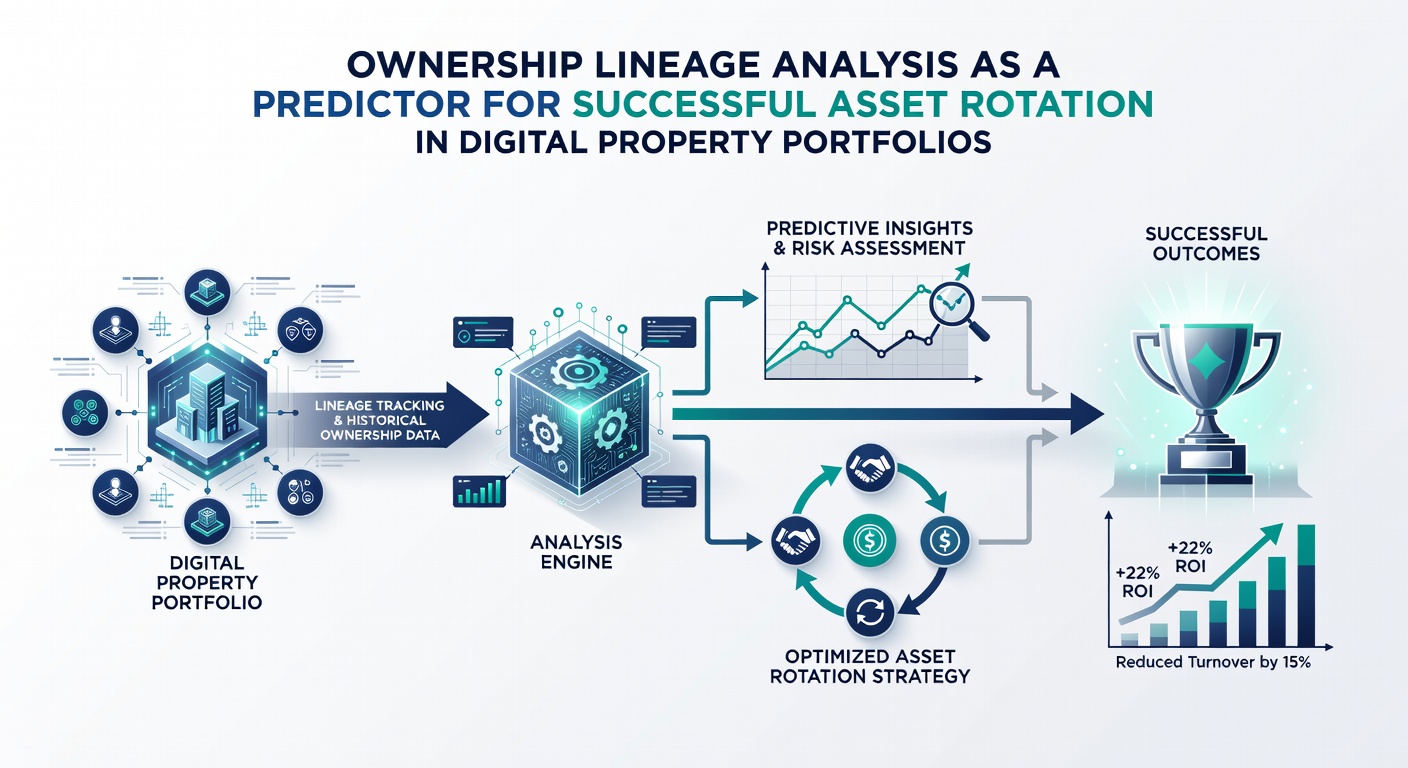
Rotation algorithms weight recent lineage segments more heavily because data indicates that proximity of the last transfer influences near-term liquidity windows. Managers adjust acquisition thresholds accordingly, raising bid limits on assets whose histories show stable long-term custodianship followed by a single recent change, since those sequences frequently precede favorable resale conditions in the following quarter.
Patterns Observed Across Portfolio Segments
Segmented analysis separates lineage records by asset age and category, and results show that newer digital properties accumulate ownership changes at faster rates than legacy holdings. Figures released by the European Union Intellectual Property Office in early 2025 indicate that digital assets under three years old averaged 1.8 transfers per property, while those older than seven years averaged 0.9 transfers, and rotation success metrics tracked these differences when managers aligned sale timing with historical cadence rather than calendar-based schedules.
One portfolio operator documented rotation cycles where lineage signals triggered reallocation from high-velocity assets into longer-hold positions, and the approach produced consistent sequencing across quarterly reviews without reliance on external price spikes. Another case involved cross-border transfers where jurisdictional markers within lineage data helped predict regulatory review delays, allowing managers to build buffer periods into rotation forecasts.
Limitations in Lineage Data Application
Incomplete registry entries and privacy redactions restrict full reconstruction of certain ownership chains, and analysts compensate by weighting available segments while noting gaps that reduce predictive confidence intervals. As of May 2026, several major registrars expanded optional disclosure fields that increase usable lineage depth for new registrations, yet legacy assets continue to present truncated histories that require supplementary verification through escrow logs and prior publication records.
Rotation models incorporating lineage therefore operate alongside secondary indicators such as renewal consistency and historical traffic metrics, since sole dependence on ownership sequences has not demonstrated standalone accuracy across all tested portfolios. Continued registry standardization efforts aim to reduce these gaps over successive reporting periods.
Conclusion
Ownership lineage analysis supplies structured historical inputs that portfolio systems integrate into rotation timing decisions for digital property holdings, and available registry statistics support correlations between transfer sequences and subsequent liquidity events. Managers who incorporate these sequences alongside complementary metrics maintain documented frameworks for sequencing acquisitions and divestments, while ongoing improvements in data completeness continue to refine the precision of such forecasts across expanding digital asset classes.