Registry Drop Timelines: Aligning Availability Windows with Portfolio Expansion and Search Integration Plans
Jordan Lang · Jun 23, 2026
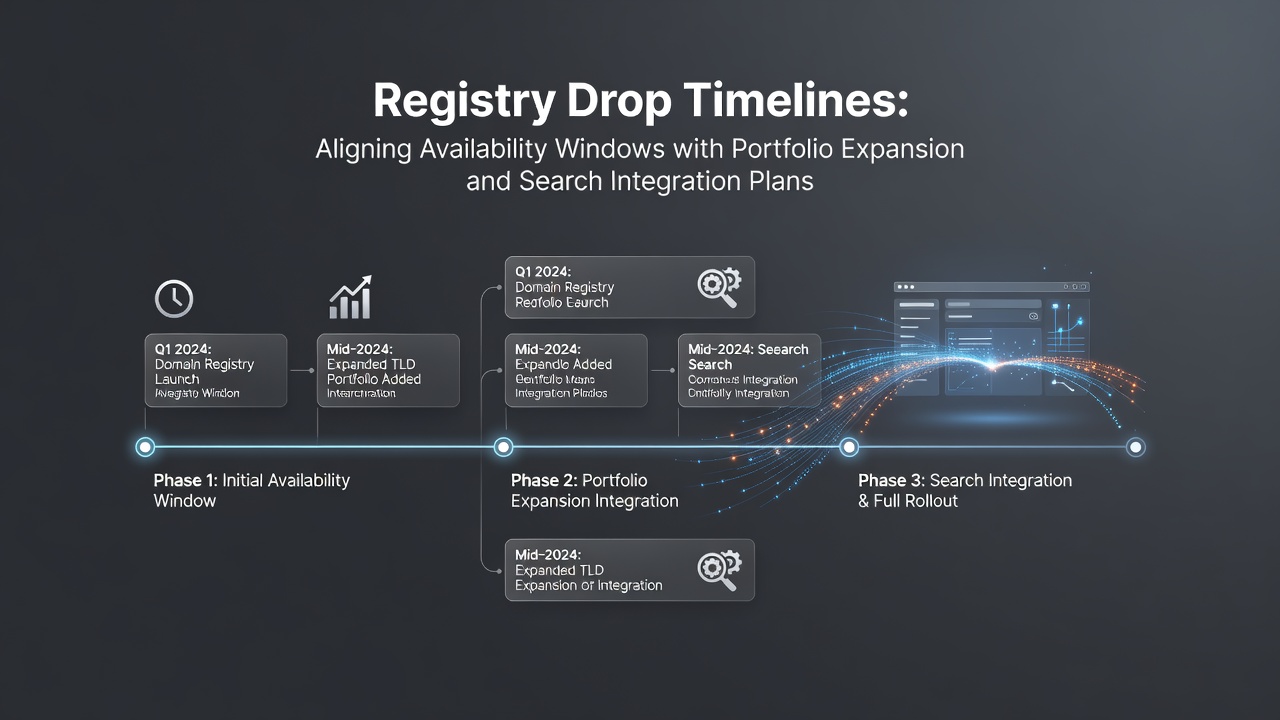
Registry Drop Timelines: Aligning Availability Windows with Portfolio Expansion and Search Integration Plans
Registry operators publish fixed schedules that determine when domains return to the available pool after expiration, and these timelines create predictable windows for acquisition teams to coordinate purchases with broader portfolio growth objectives. Major generic top-level domains follow standardized grace periods, redemption intervals, and deletion phases established through ICANN agreements, which means organizations can forecast exact dates months in advance rather than reacting to random releases. Data compiled by ICANN shows that .com and .net registries process deletions on a rolling five-day cycle once a domain exits the redemption period, while country-code operators such as those managing .ca and .au maintain distinct calendars tied to local policy frameworks. Portfolio managers therefore map these deletion dates against internal expansion targets so that newly secured names become active precisely when search infrastructure updates or keyword campaigns require additional domain assets.Understanding Deletion Phases Across Registries
Each registry applies a sequence of status changes that stretches from expiration through auto-renew, grace, redemption, and finally deletion. The .com registry, for instance, holds a domain in redemption for thirty days after the five-day auto-renew grace period ends, after which a five-day pending-delete phase precedes actual release. Organizations that track these stages through registrar APIs receive advance notice of the precise hour when a name enters the available pool, allowing automated bidding systems or manual registration teams to prepare without last-minute scrambling.
European registries governed by EURid for .eu domains operate a shorter redemption window of forty days followed by a one-week quarantine before deletion, creating tighter acquisition windows than their North American counterparts. Canadian operators through CIRA apply a sixty-day redemption period for .ca names, which shifts the entire calendar later and forces planners to adjust multi-quarter portfolio roadmaps accordingly. Observers note that these variations require separate tracking spreadsheets or dedicated software modules because a single unified calendar rarely captures every TLD’s nuances.
Coordinating Portfolio Expansion With Known Release Dates
Portfolio managers align deletion calendars with quarterly acquisition budgets by importing registry schedules into project-management platforms that flag upcoming opportunities thirty to sixty days ahead. When a cluster of desirable names is scheduled to drop within the same week, teams can stage funding approvals and legal reviews in parallel rather than sequentially, reducing the risk that capital sits idle between waves. Research from academic studies on internet infrastructure economics indicates that synchronized purchases across related keywords improve later monetization rates because thematic consistency strengthens internal linking structures and search engine crawl efficiency.
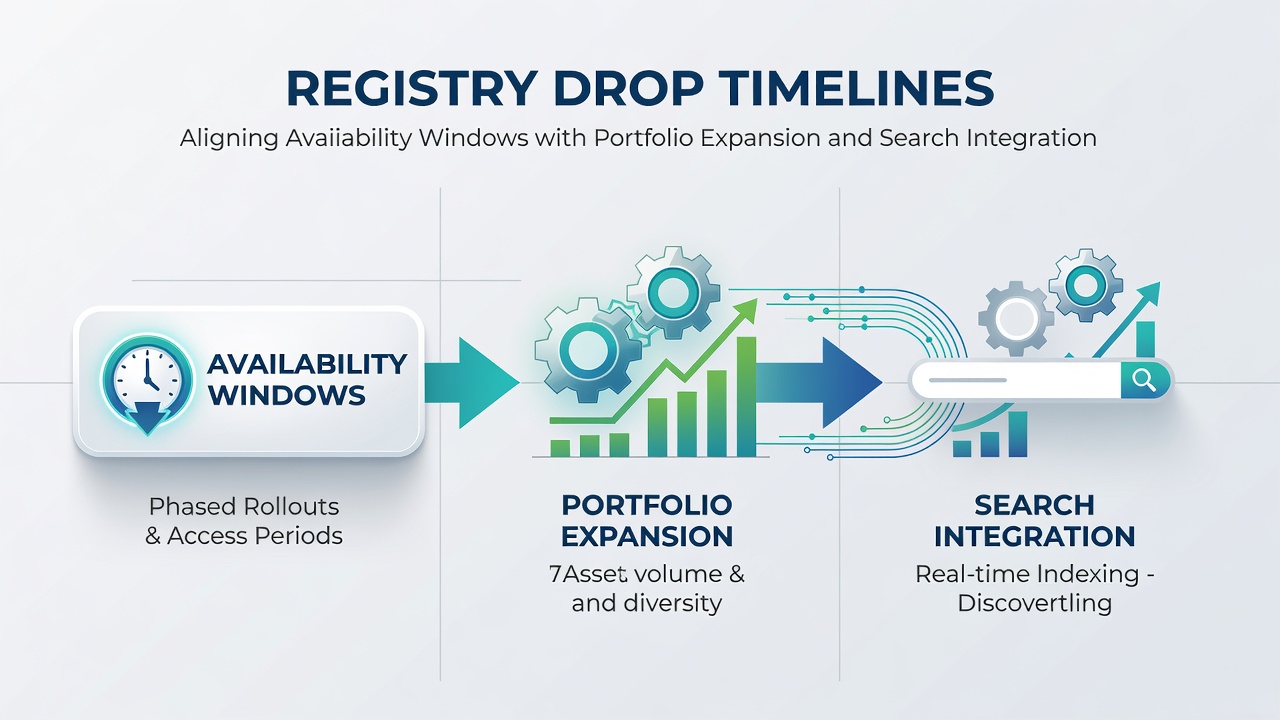
Search integration plans further dictate timing because new domains often require several weeks of indexing and authority-building before they contribute to organic rankings. Teams therefore back-calculate from campaign launch dates to determine the latest acceptable drop window, ensuring the name has cleared any pending-delete status and completed initial DNS propagation. When multiple registries release names on overlapping dates, prioritization matrices rank candidates by keyword difficulty scores and projected traffic value so that the highest-impact assets receive first attention during the narrow availability window.
Search Engine Visibility and Technical Integration Requirements
Once a dropped domain is secured, DNS configuration, SSL certificate issuance, and content migration must occur before search crawlers re-evaluate the address. Registry deletion timestamps directly influence how much lead time remains for these steps, particularly when a domain previously carried historical backlinks that search engines may reassess upon reappearance. Data from industry reports shows that domains registered within hours of deletion retain more of their prior indexing signals than those left unregistered for several days, because prolonged downtime can trigger temporary demotion in results pages.
Teams therefore maintain pre-approved hosting templates and redirect maps that activate automatically upon successful registration, shortening the interval between acquisition and search visibility. Integration with enterprise content management systems also requires advance coordination because bulk URL updates and sitemap submissions scale more efficiently when performed in batches aligned with known drop clusters rather than scattered individual registrations.
Planning for June 2026 Release Windows
Registry operators have already published preliminary calendars extending into 2026, and June of that year contains notable deletion clusters for several high-volume TLDs. Portfolio strategists are mapping those specific dates against planned site launches and search algorithm update cycles projected by major engines. Because June falls midway through many fiscal years, budget reallocations can still occur if an unusually valuable group of names appears on the schedule, allowing organizations to shift funds from later quarters without disrupting annual targets.
Conclusion
Registry deletion timelines supply the fixed points around which domain portfolio expansion and search integration activities are now routinely scheduled. By importing authoritative calendars from ICANN-accredited operators and regional registries into shared planning systems, organizations convert predictable release events into coordinated acquisition campaigns that support both immediate keyword targeting and longer-term site architecture goals. The alignment process continues to evolve as registries publish extended schedules and as search platforms refine their handling of recently re-registered assets.