Tracing Bidder Behavior Patterns Across Global Digital Property Marketplaces During Economic Shifts
Uma Klein · Jul 16, 2026
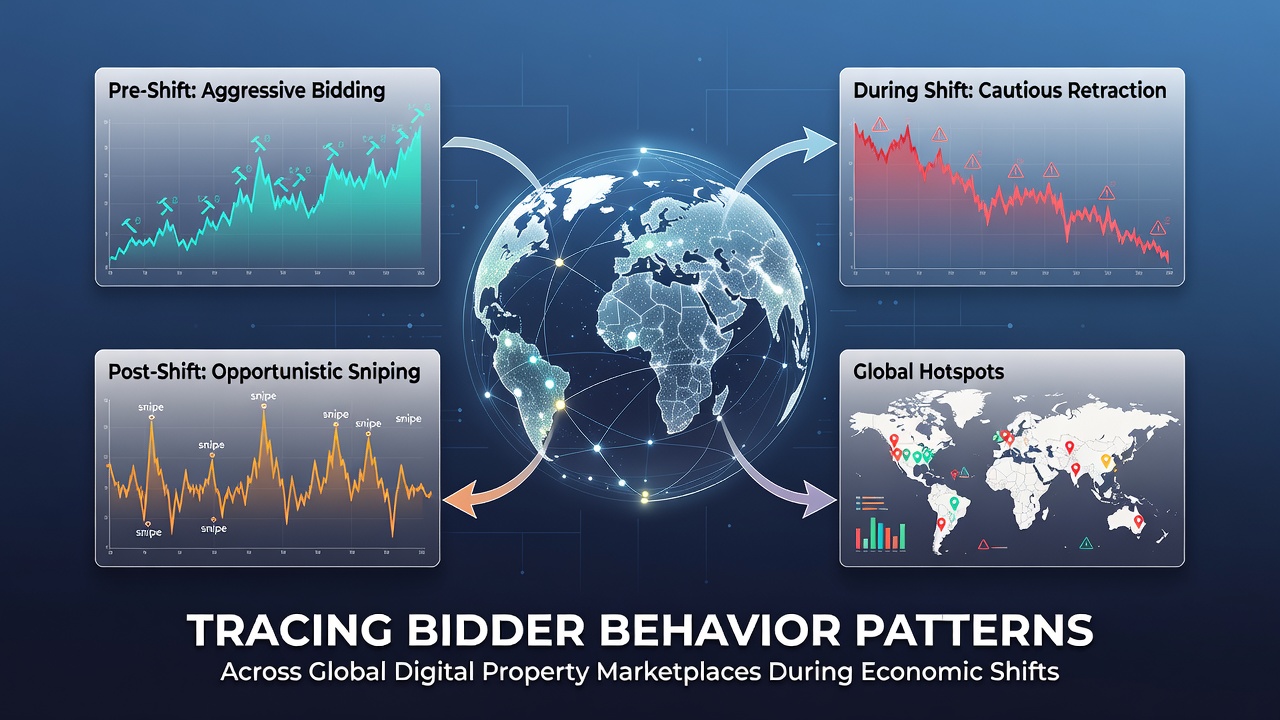
Tracing Bidder Behavior Patterns Across Global Digital Property Marketplaces During Economic Shifts
Digital property marketplaces encompass platforms where domains, virtual assets, and online real estate change hands through auctions and direct sales, and observers note distinct shifts in bidder engagement whenever broader economies experience contraction or expansion cycles. Researchers tracking these platforms have documented how participants adjust their strategies based on interest rate movements, inflation data, and employment figures released by central banks across multiple continents. Data from auction logs spanning 2018 through 2025 shows participation rates rising sharply during periods of monetary easing while average bid increments narrow when credit conditions tighten.
Patterns Observed in Major Marketplaces
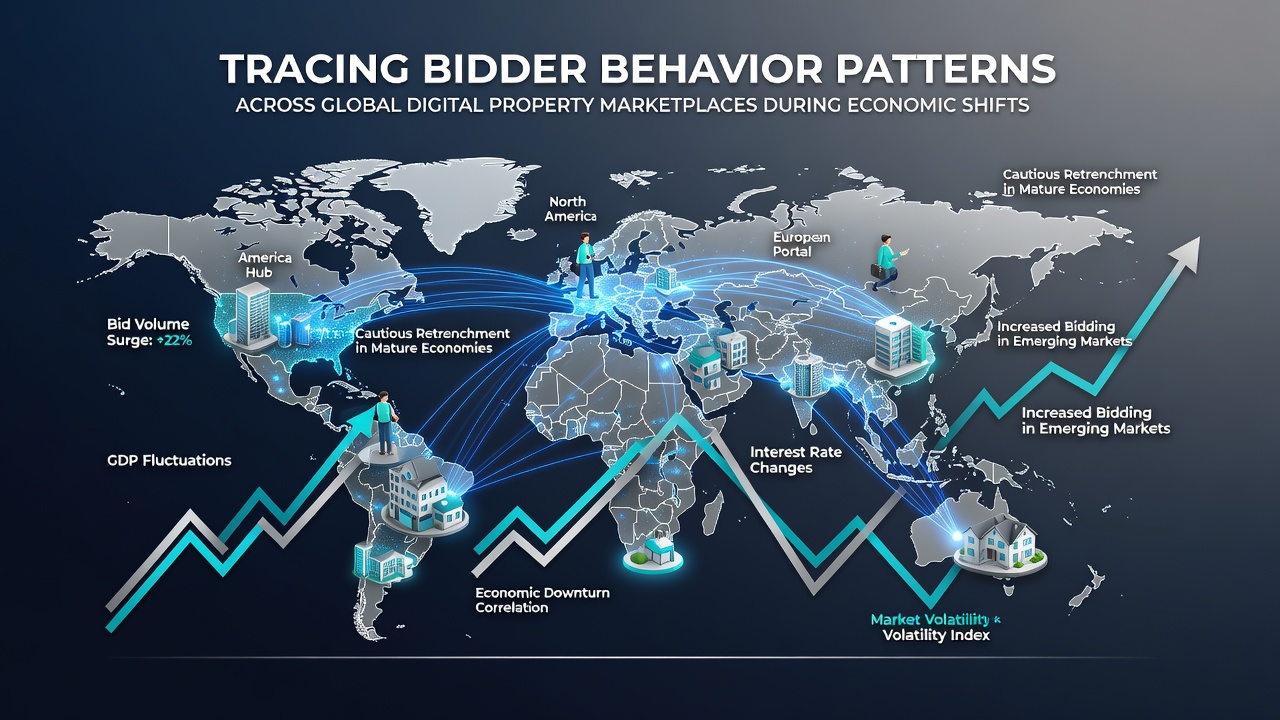
Market analysts examining records from North American, European, and Asia-Pacific exchanges report that bidders in established economies tend to favor shorter bidding windows when gross domestic product growth slows, whereas participants in emerging markets extend their involvement across multiple rounds even as local currencies fluctuate. One study released by the Organisation for Economic Co-operation and Development in late 2025 highlighted how transaction volumes in digital asset categories contracted by 22 percent during the first half of that year yet recovered partially by December as several central banks signaled policy adjustments. Those reviewing the figures point out that repeat bidders accounted for 68 percent of total activity in the fourth quarter, suggesting established players maintain presence while newer entrants pause.
Impact of Interest Rate Changes on Bidding Dynamics
Interest rate announcements from the Federal Reserve, European Central Bank, and Bank of Japan correlate closely with changes in bidding intensity across digital property platforms. When rates climbed above 4 percent in 2023, average final sale prices for premium digital assets declined by 15 percent according to aggregated exchange data, yet the number of unique bidders per listing increased as value-seeking participants entered teh market. By contrast, the subsequent rate stabilization phase that began in early 2025 coincided with longer auction durations and higher maximum bids on assets tied to established online infrastructure. Academic papers from the University of Melbourne's Centre for Digital Economy have tracked these movements and found that bidders often cluster their activity within 48 hours following major policy statements rather than spreading bids evenly throughout the month.
Regional Variations During Recent Economic Cycles
European marketplaces registered steadier bidder retention rates through the 2022 energy price surge compared with counterparts in Latin America, where currency volatility prompted many participants to exit after single unsuccessful bids. Canadian exchange operators reported a 31 percent rise in cross-border bidding from Asian accounts during the same interval, driven in part by differing inflation trajectories between the two regions. Australian Treasury reports released in mid-2025 noted similar cross-Pacific flows, with domestic bidders reducing average offer sizes while international players maintained prior levels on assets linked to technology sectors. These movements illustrate how geographic and policy differences shape participation even when global economic signals align.
Behavioral Responses in Mid-2026 Conditions
By July 2026, preliminary auction summaries from several major platforms indicated that bidders had begun incorporating forward-looking indicators such as projected semiconductor output and cloud service adoption forecasts into their valuation models. Participation from institutional accounts rose to 41 percent of total volume during the second quarter, up from 29 percent the previous year, while individual bidders shifted toward shorter holding periods before resale. Exchange operators observed that bid-to-ask spreads narrowed on assets with verifiable traffic metrics yet widened on those lacking recent performance data. Such adjustments reflect ongoing refinement of risk assessment practices amid mixed signals from manufacturing indices and consumer spending reports.
Data Collection Methods and Analytical Approaches
Researchers compile bidder behavior datasets through application programming interfaces provided by marketplace operators, supplemented by public records of completed transactions and timestamps. Machine learning models applied to these datasets have isolated variables including time-of-day activity peaks, geographic origin of bids, and correlation with equity market volatility indices. One analysis published by the National Bureau of Economic Research demonstrated that a 10 percent increase in the VIX volatility index corresponded with a 7 percent reduction in average bid amounts across digital property categories during the 2020-2022 period. Subsequent work has extended these models to include sentiment indicators derived from financial news archives, revealing additional layers of influence on bidding tempo.
Conclusion
Global digital property marketplaces continue to exhibit measurable bidder behavior shifts tied to macroeconomic indicators, with participation patterns varying by region, asset type, and policy environment. Ongoing monitoring by academic institutions and international organizations supplies the data required to map these dynamics as economies evolve through 2026 and beyond.